

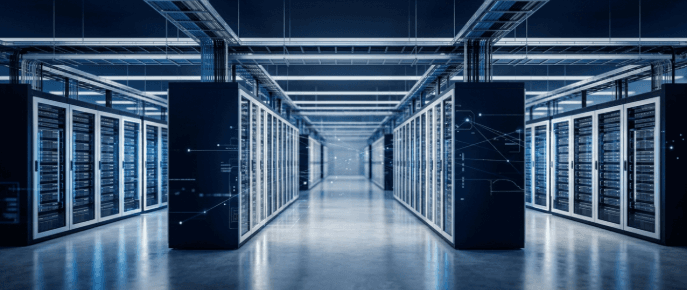
Explore real-world data center solutions and enterprise deployment experience in the UAE, covering infrastructure, security, scalability, and performance.
Data Center Solutions: Real Enterprise Deployment Experience in UAE
Data center solutions have become the operational backbone of modern enterprises across the UAE. As digital transformation accelerates, organizations are investing in secure, scalable, and high-performance infrastructure to support mission-critical applications, cloud workloads, and growing data demands. Choosing the right deployment partner is no longer optional. It is a strategic decision that directly impacts business continuity, operational resilience, and long-term competitiveness. Organizations that want to explore professional infrastructure options can learn more by visiting Vega, a provider of enterprise technology solutions across the UAE.
Key Takeaways
Data center solutions extend well beyond hardware. They encompass power infrastructure, cooling, network design, physical security, and intelligent monitoring systems that work together to deliver reliable enterprise performance.
Successful enterprise deployments in the UAE require a structured lifecycle approach, from requirement assessment and design to implementation, testing, and ongoing support, to overcome common enterprise data center implementation challenges.
Smart Datacenter technologies including AI-driven monitoring, hybrid cloud integration, and energy-efficient systems are reshaping how enterprises plan for long-term infrastructure scalability and growth.
What Are Data Center Solutions?
Understanding Enterprise Data Center Infrastructure
Enterprise data center solutions refer to the complete ecosystem of hardware, software, power systems, and operational frameworks that support an organization's IT workloads. These solutions go far beyond purchasing servers or storage devices. They involve designing a physical and logical environment capable of delivering consistent uptime, performance, and security at scale. Businesses seeking guidance on infrastructure planning can explore the Vega solutions portfolio to understand how enterprise deployments are structured from the ground up.
According to Gartner, organizations are significantly increasing investments in data center infrastructure as AI, cloud computing, and digital business applications drive demand for high-performance computing environments. This trend is especially visible across UAE industries including finance, healthcare, government, and retail.
Key Elements of a Modern Data Center
A modern enterprise data center is a carefully engineered environment. Each element contributes to reliability, performance, and security. The following components form the foundation of any professionally designed facility.
Computing infrastructure: Servers, processors, and virtualization platforms that power applications and workloads.
Storage systems: SAN, NAS, and object storage solutions that manage enterprise data efficiently. Businesses seeking storage solutions in Dubai should prioritize scalable, redundant architectures.
Networking: High-speed switching, routing, and structured cabling that connects all infrastructure layers.
Power management: Redundant power distribution, UPS systems, and generator backup to prevent downtime.
Cooling systems: Precision air conditioning and containment strategies to protect hardware from heat damage.
Security systems: Physical access controls, surveillance, and cybersecurity frameworks.
Monitoring platforms: DCIM and intelligent monitoring tools that provide real-time visibility across the environment.
Why Businesses in UAE Need Advanced Data Center Solutions
Supporting Digital Transformation
The UAE Digital Government Strategy underscores the importance of secure digital infrastructure, cloud adoption, and resilient technology ecosystems to support national digital transformation goals. Enterprises across sectors are aligning their IT investments with these priorities, requiring data center environments that support modern application architectures, cloud-native services, and real-time data processing.
Managing Growing Data Volumes
Data generation within UAE enterprises is growing at an unprecedented rate. According to IDC, worldwide data center infrastructure spending continues to rise due to increasing cloud adoption, enterprise digital transformation, and the demand for expanded data processing capabilities. Organizations must design infrastructure that scales with business growth without compromising performance or security.
Enabling Cloud and Hybrid Infrastructure
Modern enterprises rarely operate on purely on-premise infrastructure. Most organizations are adopting hybrid models that combine on-premise environments with public and private cloud platforms. Scalable smart datacenter solutions for business growth must account for cloud interconnects, workload mobility, and consistent security policies across environments. This hybrid approach gives organizations flexibility while preserving control over sensitive data.
Ensuring Business Continuity
Business continuity depends on infrastructure that delivers consistent availability. According to the Uptime Institute, reliability, operational resilience, and infrastructure design remain critical factors when organizations evaluate data center performance. A well-designed smart datacenter environment incorporates redundancy at every layer, from power and cooling to networking and storage, ensuring that no single point of failure can disrupt operations.
Real Enterprise Data Center Deployment Process
Requirement Assessment and Infrastructure Planning
Every successful data center deployment begins with a comprehensive requirements assessment. This stage involves understanding the organization's current workloads, growth projections, compliance requirements, and technology roadmap. Experienced partners conduct structured discovery sessions to identify gaps in existing infrastructure and define clear objectives before any design work begins. This foundation prevents costly rework during implementation. Partnering with a qualified provider such as Vega Digital IT Solutions, gives enterprises access to structured assessment methodologies developed through years of regional deployment experience.
Data Center Design and Architecture
The design phase translates business and technical requirements into a detailed architecture blueprint. This includes floor plan design, power distribution layout, cooling strategy, network topology, and security zoning. Enterprise data center implementation challenges often arise when design decisions are rushed or driven by cost alone. A properly engineered design balances performance, redundancy, and future scalability from the outset.
Power and Cooling Implementation
Power and cooling infrastructure are among the most critical and complex aspects of any data center deployment. Implementing a reliable UPS system is essential to protect workloads against power fluctuations and outages. According to the International Energy Agency, data centers are a growing focus area for energy efficiency improvements as digital workloads increase globally. Proper power distribution, generator backup, and precision cooling systems are deployed to maintain environmental stability and operational efficiency.
Network and Security Deployment
Network architecture connects all components within the data center and links the facility to external environments, including cloud platforms and branch offices. Server solutions must be integrated within a structured cabling framework that supports current bandwidth requirements and anticipates future expansion. Physical security including biometric access controls, CCTV surveillance, and intrusion detection systems is implemented alongside cybersecurity measures such as firewalls, segmentation, and threat monitoring.
Testing, Optimization, and Go-Live
Before a data center goes live, comprehensive testing validates every system. This includes power failover testing, cooling performance verification, network latency benchmarking, and security penetration assessments. Any performance gaps identified during testing are addressed before production workloads are migrated. This disciplined approach to go-live significantly reduces the risk of post-deployment incidents.
Ongoing Monitoring and Support
A data center deployment does not end at go-live. Continuous monitoring using DCIM platforms and intelligent alerting tools ensures that infrastructure performance, capacity utilization, and environmental conditions remain within defined thresholds. Proactive support models allow experienced teams to identify and resolve potential issues before they affect business operations.
Critical Components of Enterprise Data Center Solutions
Server and Storage Infrastructure
High-performance server solutions form the compute layer of any enterprise data center. Organizations must select server architectures that align with their workload profiles, whether that involves virtualization, containerization, or high-performance computing. Storage solutions in Dubai are increasingly built on scalable all-flash and hybrid storage arrays that deliver the performance required by modern databases and analytics platforms.
Structured Cabling and Network Connectivity
Structured cabling is the physical foundation of data center connectivity. Well-designed cabling infrastructure reduces latency, simplifies troubleshooting, and supports future bandwidth upgrades. A properly cabled data center is easier to manage, more reliable, and more adaptable to technology changes over time.
Power Distribution and Backup Systems
Reliable power infrastructure is non-negotiable in enterprise environments. Redundant power distribution units, automatic transfer switches, and a properly sized UPS system ensure that computing infrastructure remains operational during utility power disruptions. Diesel generators provide extended backup autonomy for prolonged outage scenarios.
Cooling and Environmental Management
Cooling systems maintain the thermal environment necessary for hardware reliability. Precision air conditioning units, hot and cold aisle containment, and in-row cooling solutions are deployed based on rack density and heat load calculations. Environmental monitoring sensors track temperature, humidity, and airflow in real time to trigger alerts and automated responses.
Physical Security and Access Control
Physical security protects infrastructure from unauthorized access and potential damage. Enterprise data centers deploy multi-layer access control systems including biometric readers, key card systems, and video surveillance at all entry points. Security logs provide audit trails that support compliance requirements across regulated industries.
Data Center Monitoring Systems
Intelligent monitoring platforms provide real-time visibility across compute, storage, network, power, and cooling systems. Smart Datacenter environments leverage AI-driven analytics to predict equipment failures, optimize resource utilization, and automate routine operational tasks. This level of visibility is essential for maintaining high availability in complex enterprise environments. Organizations looking to implement intelligent monitoring across their facilities can contact Vega Digital IT Solutions for a tailored consultation.
How Data Center Solutions Improve Business Performance
Professionally designed and deployed data center solutions deliver tangible business outcomes that extend beyond IT performance metrics. Organizations that invest in purpose-built data center environments experience measurable improvements across multiple dimensions.
Higher system availability: Redundant infrastructure and proactive monitoring minimize unplanned downtime.
Improved application performance: Optimized compute, storage, and network resources accelerate business applications.
Enhanced data security: Layered physical and cybersecurity controls reduce exposure to internal and external threats.
Reduced downtime risks: Tested failover mechanisms protect critical workloads during infrastructure failures.
Better disaster recovery readiness: Geographically distributed or replicated environments support recovery from major incidents.
Scalable infrastructure growth: Modular design allows capacity expansion without service disruption.
Improved operational efficiency: Automation and intelligent monitoring reduce manual workload on IT teams.
Support for emerging technologies: AI-ready infrastructure enables organizations to adopt advanced computing workloads as requirements evolve.
Key Technologies Shaping Modern Data Centers
Cloud Integration and Hybrid Infrastructure
Cloud integration allows enterprises to extend their on-premise data center capabilities into public and private cloud platforms. Hybrid infrastructure provides workload flexibility while enabling organizations to maintain control over data sovereignty and compliance. The ability to seamlessly move workloads between environments is a defining characteristic of scalable smart datacenter solutions for business growth.
Edge Computing
Edge computing pushes processing closer to data sources, reducing latency for time-sensitive applications. Industries such as manufacturing, logistics, and retail are deploying edge nodes that extend the reach of centralized data centers to remote locations and operational sites across the UAE.
AI-Optimized Data Centers and Automation
AI workloads demand high-density computing environments with advanced GPU infrastructure and specialized storage architectures. Automation tools within modern data centers handle routine tasks such as provisioning, patch management, and capacity planning, freeing IT teams to focus on strategic priorities. Enterprise data center implementation challenges related to complexity and scale are increasingly addressed through intelligent automation platforms.
Energy-Efficient Infrastructure
Sustainability is becoming a core design requirement for new data center deployments. Energy-efficient cooling, power distribution, and workload optimization reduce operational costs and support environmental responsibility goals aligned with UAE sustainability initiatives.
Choosing the Right Data Center Solutions Provider in UAE
Why Real Deployment Experience Matters
Many technology providers offer data center products or consultancy services. Fewer can demonstrate real-world data center deployment experience in UAE enterprises across multiple industries and infrastructure scales. Selecting a partner with proven deployment expertise ensures that design decisions are informed by practical experience rather than theoretical frameworks. Organizations benefit most from partners who have managed deployments across varying complexity levels and can anticipate challenges before they become costly problems during implementation.
What to Evaluate in a Data Center Partner
Enterprise deployment experience: Verified track record of delivering complex data center projects at enterprise scale.
Infrastructure design expertise: Ability to architect environments that balance performance, redundancy, and cost efficiency.
Security and compliance knowledge: Understanding of UAE regulatory requirements and industry-specific compliance standards.
Scalable architecture planning: Design approaches that accommodate future growth without requiring complete infrastructure replacement.
Post-deployment support capability: Ongoing monitoring, maintenance, and optimization services that protect your investment over time.
Future of Data Center Infrastructure in UAE
The UAE data center market is evolving rapidly. AI-ready computing environments, green data center designs, edge deployments, and cloud-native infrastructure are defining the next generation of enterprise facilities. Organizations that plan their data center strategies today with these trends in mind will be better positioned to adopt emerging technologies without costly infrastructure overhauls.
Key developments shaping the future include AI-optimized computing, sustainable power and cooling systems, distributed edge architectures, increased operational automation, and high-performance computing environments that support complex workloads across sectors including financial services, healthcare, and government.
Conclusion
Data center solutions are the foundation of reliable, secure, and scalable digital operations for enterprises across the UAE. Successful deployments require far more than infrastructure procurement. They demand strategic planning, expert architecture design, disciplined implementation, and ongoing operational excellence. Organizations that partner with experienced providers gain access to the knowledge, processes, and technologies needed to build data centers that support long-term business growth and resilience. Engaging a qualified partner early in the planning process is the most effective way to avoid common pitfalls and accelerate time to value from new infrastructure investments. To begin planning your enterprise data center deployment with a team that brings proven regional expertise, connect with us and take the first step toward a more resilient and scalable infrastructure.
Frequently Asked Questions
Q1: What are data center solutions?
Answer: Data center solutions are integrated systems of computing, storage, networking, power, cooling, and security infrastructure that support enterprise IT operations. They provide the physical and logical environment needed to run applications, store data, and deliver services reliably across UAE business environments.
Q2: Why are data center solutions important for enterprises?
Answer: Enterprises depend on data center solutions to maintain uptime, protect sensitive data, support cloud workloads, and enable digital services. Without properly designed infrastructure, organizations face downtime risks, security vulnerabilities, and performance bottlenecks that directly impact revenue, customer experience, and regulatory compliance.
Q3: What does a data center deployment include?
Answer: A complete data center deployment includes requirement assessment, infrastructure design, server and storage implementation, structured cabling, power distribution, UPS system installation, cooling setup, network configuration, physical security, and comprehensive testing before go-live. Ongoing monitoring and support are also critical components of any professional deployment.
Q4: How do data centers support business continuity?
Answer: Data centers support business continuity through redundant power systems, failover networking, replicated storage, and tested disaster recovery procedures. A properly designed smart datacenter environment eliminates single points of failure, ensuring critical applications remain available during hardware failures, power outages, or other infrastructure incidents.
Q5: What factors should businesses consider when designing a data center?
Answer: Businesses should evaluate power redundancy, cooling capacity, network architecture, physical security, scalability, compliance requirements, and total cost of ownership. Organizations experiencing enterprise data center implementation challenges benefit from working with experienced partners who translate business requirements into purpose-built infrastructure designs that support long-term growth.
Q6: What is the difference between traditional and modern data centers?
Answer: Traditional data centers rely on manually managed physical servers and siloed infrastructure components. Modern data centers incorporate virtualization, software-defined networking, AI-driven monitoring, hybrid cloud integration, and energy-efficient systems that represent scalable smart datacenter solutions for business growth adapting dynamically to changing enterprise demands.
Q7: How do hybrid cloud environments impact data center requirements?
Answer: Hybrid cloud environments require data centers to support high-speed connectivity to public cloud platforms, consistent security policies across environments, and flexible workload mobility. Organizations using server solutions within hybrid architectures need infrastructure designed with cloud interconnects and data sovereignty controls built into the original architecture from the planning stage.
Q8: Why should enterprises choose experienced data center deployment partners?
Answer: Experienced partners bring real-world data center deployment experience in UAE enterprises that cannot be replicated through product knowledge alone. They identify design risks early, apply proven implementation methodologies, and provide post-deployment support that protects infrastructure investments over time, delivering measurable improvements in availability and operational efficiency.
Q9: What role does a UPS system play in enterprise data center infrastructure?
Answer: A UPS system provides immediate power backup when utility supply is interrupted, protecting servers, storage, and networking equipment from sudden shutdowns. In enterprise data centers, UPS systems work alongside power distribution units and diesel generators to ensure continuous operation during outages, preventing data corruption and maintaining application availability.
Q10: How are storage solutions in Dubai evolving for enterprise needs?
Answer: Storage solutions in Dubai are increasingly built on all-flash and hybrid storage arrays that deliver high performance for databases, analytics, and virtualized workloads. Enterprises are adopting scalable storage architectures aligned with UAE compliance requirements that integrate with cloud platforms and support growing data volumes without compromising security or sovereignty.