

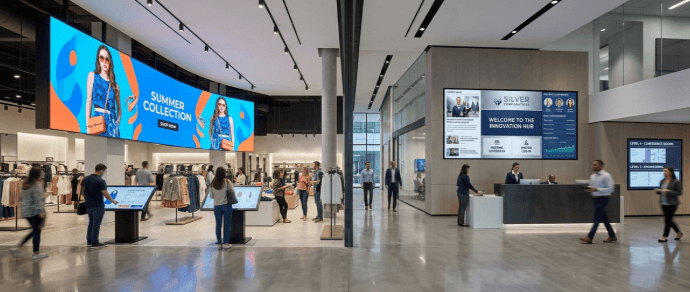
Discover digital signage solutions for retail and corporate communication, designed to improve engagement, deliver information, and enhance customer experiences.
Digital signage solutions have evolved far beyond simple screens displaying static content. Today, they represent intelligent communication ecosystems that help businesses deliver real-time messaging, drive customer engagement, and streamline internal operations across multiple locations. As organizations across retail, corporate, and commercial sectors compete for attention in increasingly digital environments, the ability to communicate dynamically and at scale has become a critical business advantage. This blog explores how modern digital signage systems work, the technologies powering them, and how they deliver measurable business value. Businesses looking to implement scalable display networks can explore enterprise digital signage solutions from Vega designed for retail and corporate environments across the UAE.
Key Takeaways
Digital signage solutions are enterprise communication platforms that integrate cloud CMS, AI, IoT, and analytics to deliver targeted, real-time content across retail and corporate environments.
From digital signage solutions for retail engagement in Dubai to corporate communication networks, these systems improve customer experience, employee communication, and brand consistency simultaneously.
Choosing the right technology partner with scalable platforms, hardware and software integration expertise, and remote support capabilities is essential for long-term success.
What Are Digital Signage Solutions?
Understanding Digital Signage Systems
A digital signage solution is a networked system of digital displays managed through a centralized software platform to deliver targeted visual content to specific audiences at the right time and location. These systems include display hardware such as LED Display Solutions, media players, connectivity infrastructure, and a digital signage content management system that controls what is shown, when it appears, and how it is updated across the network.
Modern digital signage systems are cloud powered, allowing organizations to manage thousands of screens remotely from a single dashboard. Content can range from promotional videos and product information to real-time data feeds, social media integrations, and emergency alerts. This flexibility makes digital signage one of the most versatile communication tools available to businesses today.
How Digital Signage Differs from Traditional Signage
Traditional static signage requires physical replacement every time content needs to change, creating delays, printing costs, and operational inefficiencies. A modern digital signage solution, by contrast, allows instant content updates across entire networks with a few clicks. Businesses can schedule campaigns in advance, respond to real-time data triggers, and personalize content based on audience demographics or location. According to Grand View Research, the global digital signage market continues to grow rapidly as businesses increase investments in customer engagement, retail technology, and smart workplace communication.
How Digital Signage Enhances Retail Customer Experience
Dynamic Product Promotions
Retailers using digital signage solutions for retail engagement can deploy visually compelling product promotions that respond to time of day, season, inventory levels, or local events. Instead of printing new posters for every campaign, retail teams can update all in-store screens instantly from a cloud dashboard. This agility enables faster campaign launches, reduces marketing production costs, and ensures that promotional content stays current and relevant to shopper behavior. Discover how LED display solutions from Vega support dynamic retail promotions at scale across multiple store locations.
Personalized Customer Engagement
AI powered digital signage solutions for retail engagement in Dubai and other dynamic markets are enabling personalized in-store experiences based on real-time audience data. Sensors and cameras integrated with display systems can detect customer demographics and adjust content accordingly, showing relevant products or offers to different shopper profiles. This level of personalization, previously limited to digital advertising platforms, is now possible within physical retail environments, bridging the gap between online and in-store experiences.
Interactive Shopping Experiences
Interactive digital signage display solutions for businesses allow customers to browse product catalogs, check availability, access loyalty programs, and locate items within a store. These touchscreen or gesture based systems reduce staff workload while empowering customers with self service capabilities. Shopping malls and flagship retail stores across the UAE are increasingly deploying interactive kiosks and wayfinding systems to improve navigation and customer satisfaction.
Real-Time Pricing and Inventory Updates
Connected through IoT infrastructure, LED Wall Solutions in retail environments can display real-time pricing, stock availability, and flash sale alerts that update automatically based on backend inventory or pricing systems. This eliminates manual display updates, reduces pricing errors, and ensures customers always see accurate information. Real-time data integration transforms retail displays from passive decoration into active sales tools that support conversion at the point of decision.
How Digital Signage Supports Corporate Communication
Real-Time Corporate Communication Using Digital Signage Systems
Real-time corporate communication using digital signage systems has become a cornerstone of modern workplace strategy. Organizations deploy networked displays in lobbies, corridors, breakrooms, and open workspaces to share company announcements, KPIs, HR updates, and cultural messaging. According to Deloitte, digital workplace technologies are improving employee engagement, communication efficiency, and operational productivity across modern enterprises, making digital signage a key component of internal communication strategies.
Executive Messaging and Brand Alignment
Leadership teams use digital signage networks to broadcast executive messages, company milestones, and strategic priorities in a visually compelling format. Unlike emails that may go unread, on screen content in high traffic areas captures employee attention effectively. A centralized digital signage content management system ensures that all messaging is consistent, brand aligned, and delivered simultaneously across every office location, reinforcing a unified organizational culture.
Meeting Room and Workspace Displays
Smart workplace environments integrate digital displays outside meeting rooms to show real-time room availability, booking schedules, and occupancy data. These systems reduce double bookings, improve space utilization, and give employees instant visibility into workspace availability. According to Microsoft, digital workplace solutions and cloud collaboration platforms are helping organizations improve communication, employee engagement, and business agility in hybrid work environments. For organizations seeking integrated workplace display systems, corporate AV solutions from Vega offer end to end meeting room and workspace display installations.
Visitor Management and Wayfinding
Portable signage displays and permanent installations at building entrances help guide visitors through complex facilities, reducing confusion and improving first impressions. Interactive wayfinding systems display floor maps, department directories, and meeting room locations, enabling self service navigation for guests and new employees. These systems also support visitor registration workflows, integrating with access control and communication platforms for a seamless reception experience.
Key Technologies Behind Modern Digital Signage
Cloud Based Content Management Systems
A robust digital signage content management system is the operational backbone of any enterprise signage network. Cloud based CMS platforms allow administrators to schedule content, manage playlists, monitor screen health, and push updates remotely across hundreds or thousands of displays. This eliminates the need for on-site technicians for routine updates and enables organizations to maintain content consistency and campaign accuracy across all locations. Statista reports continued growth in digital advertising and digital display investments as organizations prioritize personalized customer experiences and real-time content delivery.
Artificial Intelligence and Audience Analytics
AI integration enables digital signage solutions to analyze audience demographics, dwell times, and engagement patterns, then adapt content delivery accordingly. Machine learning algorithms optimize which content performs best at different times of day or for different audience segments. These insights allow marketing and communication teams to continuously improve messaging effectiveness based on real behavioral data rather than assumptions.
IoT Integration and Connected Displays
IoT connectivity allows LED Display Solutions to receive and display real-time data from sensors, business systems, and external data feeds. Temperature, occupancy, traffic flow, and product inventory data can all trigger automated content changes. This creates dynamic, context aware communication that responds to physical conditions and business events, making the display network an active participant in operations rather than a passive broadcast channel.
Interactive Touch Displays and Touchless Technology
Interactive digital signage display solutions for businesses now incorporate gesture recognition, voice commands, and mobile device integration alongside traditional touchscreens. These technologies enable contactless interaction, which has become especially important in healthcare and public facing environments. Customers and employees can interact with content using their smartphones, scanning QR codes, or using proximity based triggers to access personalized information.
Business Benefits of Digital Signage Solutions
Increased customer engagement through dynamic, targeted, and visually compelling content.
Improved employee communication with real-time announcements and executive messaging across all locations.
Centralized content management via cloud CMS platforms that enable remote updates and scheduling.
Faster campaign deployment replacing days of printing and installation with instant digital updates.
Consistent brand messaging across every display, location, and audience touchpoint.
Reduced printing and production costs by eliminating recurring static signage expenses.
Enhanced operational efficiency through automated content triggers and IoT driven data integration.
Better audience analytics enabling data driven decisions about content strategy and placement.
Industries Benefiting from Digital Signage
The versatility of digital signage solutions makes them valuable across virtually every sector. Retail environments use them for promotions and wayfinding. Corporate offices deploy them for employee communication and space management. Hospitality venues use digital displays for guest services and event promotion. Healthcare facilities rely on them for patient information and wayfinding. Educational institutions display schedules, announcements, and campus maps. Banking institutions use digital displays for queue management and financial promotions. Shopping malls, airports, government facilities, and smart buildings all depend on scalable signage networks to communicate efficiently with diverse audiences.
The UAE Digital Government actively promotes smart technologies and digital transformation initiatives that encourage the adoption of intelligent communication systems across both public and private sectors, reinforcing the strategic relevance of digital signage in the region.
Choosing the Right Digital Signage Solution Provider
Industry Expertise and Proven Experience
Selecting a provider with demonstrated experience across your industry ensures that the solution is designed for your specific communication challenges. Look for partners who have delivered digital signage solutions across retail, corporate, hospitality, and commercial environments, and who understand the integration requirements of complex enterprise networks.
Scalable Content Management Platform
Your digital signage content management system must be able to grow with your business. Evaluate whether the platform supports multi-site management, role based access control, automated scheduling, and third party data integrations. A scalable CMS ensures that as your screen network expands, management remains centralized and efficient without increasing administrative complexity.
Hardware and Software Integration
End to end integration between display hardware, including LED Wall Solutions and portable signage displays, and backend software platforms is essential for reliable performance. Providers who manage both hardware procurement and software configuration reduce integration risks and ensure that all components work seamlessly together from day one.
Remote Monitoring and Support
Enterprise signage networks require ongoing support to maintain uptime and content accuracy. Choose providers who offer remote monitoring, automated fault detection, and responsive technical support. Proactive maintenance reduces downtime, protects your investment, and ensures that every screen is always delivering the right message to the right audience.
Future Ready Technology
The digital signage landscape is evolving rapidly with advancements in AI, IoT, and interactive technologies. Partner with providers who invest in innovation and offer upgrade pathways that keep your network current without requiring full system replacements. Future ready platforms protect your technology investment and ensure long-term strategic value.
Future Trends in Digital Signage
The next generation of digital signage solutions will be shaped by AI powered content personalization, delivering hyper relevant experiences to individual viewers based on real-time data. Data driven digital experiences will connect signage networks with CRM, ERP, and analytics platforms to create fully responsive communication ecosystems. IoT connected displays will automate content based on environmental and operational triggers. Interactive and touchless technologies will expand accessibility across public and healthcare settings. Sustainability will drive demand for paperless communication strategies. Smart building integration will embed signage into building management systems for unified facility communication. Omnichannel engagement will connect in-store digital experiences with mobile, social, and e-commerce platforms for seamless customer journeys.
Conclusion
Digital signage solutions have become essential communication platforms for organizations that want to improve customer experiences, streamline internal communications, and strengthen brand engagement across every location. Businesses investing in intelligent signage systems today gain the agility to respond quickly to market changes, the tools to communicate consistently at scale, and the analytics to make smarter content decisions. Vega Digital delivers end to end digital signage solutions designed to help retailers engage customers, empower employees, and build scalable communication ecosystems. Connect with our experts to transform your retail or corporate communication strategy and position your organization for long-term digital success. Explore the full range of technology solutions from Vega that support intelligent communication, smart workplace design, and enterprise digital transformation.
Frequently Asked Questions
Q1: What are digital signage solutions?
Answer: A digital signage solution is a networked system of digital displays managed through a centralized cloud CMS platform to deliver targeted visual content to specific audiences. These systems integrate hardware, software, and connectivity infrastructure to enable real-time, automated, and scheduled content delivery across multiple locations.
Q2: How does digital signage improve retail customer experience?
Answer: Digital signage improves retail customer experience by enabling dynamic product promotions, personalized content delivery, interactive shopping kiosks, and real-time pricing updates. Retailers can respond instantly to inventory changes and campaign requirements without printing new materials, making it a highly cost effective and agile communication tool.
Q3: How is digital signage used for corporate communication?
Answer: Organizations use real-time corporate communication using digital signage systems to broadcast company announcements, executive messages, KPIs, and HR updates across office networks. Displays in lobbies, corridors, and workspaces ensure employees receive consistent, timely, and visually compelling communications regardless of their location within the facility.
Q4: What are the benefits of digital signage for businesses?
Answer: Key benefits include increased customer engagement, improved employee communication, centralized content management, faster campaign deployment, consistent brand messaging, reduced printing costs, enhanced operational efficiency, and better audience analytics. These outcomes make digital signage a high value investment for businesses seeking scalable, data driven communication platforms.
Q5: What technologies power modern digital signage systems?
Answer: Modern digital signage systems are powered by cloud based content management systems, artificial intelligence, IoT connectivity, interactive touch and gesture displays, and audience analytics platforms. These technologies create intelligent, automated, and personalized communication networks that respond to real-time data and IoT connected audience behavior monitoring tools.
Q6: Which industries benefit most from digital signage?
Answer: Retail, corporate offices, hospitality, healthcare, education, banking, shopping malls, airports, government facilities, and smart buildings all benefit significantly from digital signage. Its versatile applications make intelligent display systems valuable across any sector that requires dynamic, scalable, and audience aware communication strategies.
Q7: How do businesses choose the right digital signage solution provider?
Answer: Businesses should evaluate providers based on industry expertise, scalable CMS platform capabilities, hardware and software integration experience, remote monitoring and support services, and commitment to future ready technology. A provider with end to end capabilities reduces integration risks and ensures consistent performance across the entire signage network.
Q8: What is a digital signage content management system?
Answer: A digital signage content management system is a software platform that allows administrators to create, schedule, manage, and update content across networked displays remotely. Cloud based CMS platforms support multi-site management, automated scheduling, role based access control, and real-time content triggers for enterprise scale managed signage network deployments.
Q9: Why is digital signage important for digital transformation?
Answer: Digital signage supports digital transformation by replacing inefficient static communication with intelligent, data driven, real-time messaging platforms. It connects customer engagement, employee communication, marketing, and operational data into a unified ecosystem that improves agility, brand consistency, and measurable business outcomes across every organizational touchpoint.
Q10: What are the latest trends in digital signage solutions?
Answer: Current trends include AI powered content personalization, IoT connected display automation, interactive and touchless technologies, sustainability through paperless communication strategies, smart building integration, and omnichannel customer engagement. These advancements are transforming interactive digital signage display solutions for businesses into intelligent, fully connected enterprise communication platforms.