
Discover how industrial automation is transforming manufacturing in the UAE through robotics, AI, IoT, and smart technologies that improve efficiency, quality, safety, and competitiveness.
Industrial automation is fundamentally changing how manufacturers in the UAE design, build, and deliver products. As the country accelerates its economic diversification agenda, manufacturing businesses are under increasing pressure to produce more efficiently, reduce costs, and compete on a global scale. The rise of smart automation systems, connected machines, robotics, and data-driven platforms is enabling UAE manufacturers to modernise their operations and respond to the demands of a fast-changing industrial landscape. For businesses assessing whether their current connectivity infrastructure is ready to support automation, understanding the signs that indicate a need to upgrade is a useful starting point, and our guide on office WiFi upgrade signs outlines key indicators relevant to connected environments.
This article explores how industrial automation is transforming the UAE manufacturing sector, what technologies are driving this change, and how manufacturers can practically begin their automation journey.
Key Takeaways
• Industrial automation in UAE is being driven by government strategies such as Operation 300bn and the UAE Industry 4.0 initiative, which aim to build a smarter, more competitive manufacturing sector.
• Technologies such as robotics, Industrial IoT, AI, machine vision, and predictive maintenance are helping manufacturers improve efficiency, quality, safety, and operational visibility.
• UAE manufacturers can start their automation journey by identifying high-impact processes, assessing existing infrastructure, and choosing scalable smart automation solutions aligned with measurable business goals.
What Is Industrial Automation?
Industrial automation refers to the use of technology, control systems, software, and connected devices to perform manufacturing tasks with minimal human intervention. It covers everything from basic mechanised processes to advanced intelligent systems capable of self-monitoring, decision-making, and continuous optimisation.
From Traditional Automation to Smart Manufacturing
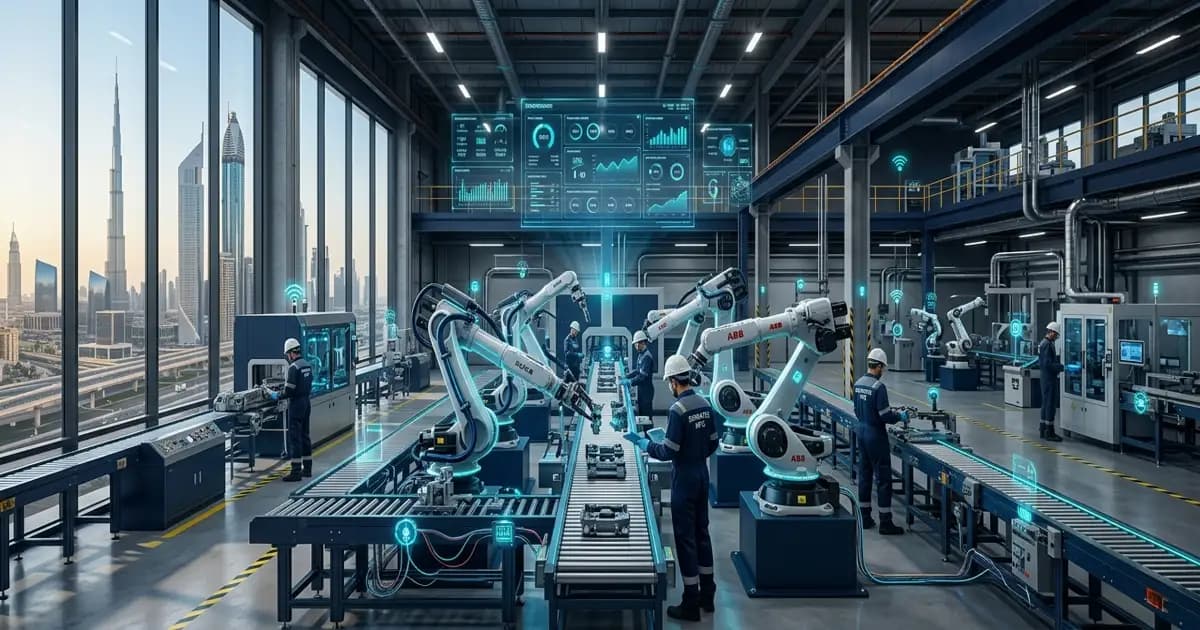
Early industrial automation focused on replacing repetitive manual tasks with programmable machines and control systems. Today, smart factory automation systems go much further. Connected machines, sensors, AI-driven analytics, and cloud platforms now allow manufacturers to monitor entire production environments in real time, respond to operational changes dynamically, and continuously improve performance based on live data.
How Industrial Automation Works
Modern industrial automation integrates hardware and software across the production environment. Sensors capture operational data from machines and processes. Control systems process this data and adjust machine behaviour automatically. Analytics platforms interpret the data to identify trends, inefficiencies, and maintenance needs. Together, these layers create an intelligent production environment that operates with greater precision and less human error. Reliable networking infrastructure is a foundational requirement for ensuring that data flows seamlessly between sensors, control systems, and analytics platforms across the factory floor.
Key Technologies Driving Modern Automation
The technologies at the core of today's automation include industrial robotics, Industrial IoT, AI and machine learning, machine vision systems, industrial control systems, predictive maintenance platforms, digital twins, data analytics, and edge or cloud computing. Each of these plays a distinct role in enabling manufacturers to operate more efficiently and with greater intelligence. Software solutions that integrate with these hardware technologies are equally important, providing the dashboards, analytics engines, and management platforms that translate raw operational data into actionable intelligence.
Why Is Industrial Automation Growing in UAE?
UAE's Industrial and Economic Diversification Goals
The UAE's Operation 300bn strategy, led by the Ministry of Industry and Advanced Technology, aims to grow the industrial sector's contribution to GDP to AED 300 billion by 2031. A central pillar of this strategy is the adoption of advanced technologies, including industrial automation, to strengthen the UAE's position as a global industrial hub. This government-level commitment is creating clear incentives for manufacturers to invest in smart technologies.
Growth of Industry 4.0 Adoption
The UAE Industry 4.0 initiative, also supported by the Ministry of Industry and Advanced Technology, is designed to accelerate digital transformation across the industrial sector. It encourages manufacturers to adopt technologies such as AI, IoT, robotics, and advanced analytics. This initiative is directly aligned with the country's ambition to develop a knowledge-driven industrial economy built on innovation and technology.
Increasing Demand for Efficient and Competitive Manufacturing
Global competition, rising operational costs, supply chain pressures, and growing customer expectations are pushing UAE manufacturers to find smarter ways to produce. Automation in Dubai and across the wider UAE is enabling businesses to produce faster, with greater consistency, and at lower unit costs compared to purely labour-intensive approaches.
Government Support for Advanced Manufacturing
Beyond strategy, the UAE government has introduced investment programmes, free zone incentives, and public-private partnerships designed to accelerate technology adoption in manufacturing. This ecosystem of support is making it increasingly practical for manufacturers of all sizes to explore Industry 4.0 automation solutions.
Key Technologies Transforming Manufacturing
Industrial Robotics and Factory Automation
According to the International Federation of Robotics, global industrial robot installations continue to grow year on year as manufacturers recognise the productivity, precision, and safety benefits of robotic systems. Robotics solutions for manufacturing industries are being deployed for welding, assembly, material handling, painting, packaging, and inspection. These systems reduce cycle times, improve consistency, and allow production lines to operate continuously without fatigue-related errors.
Industrial IoT and Connected Machines
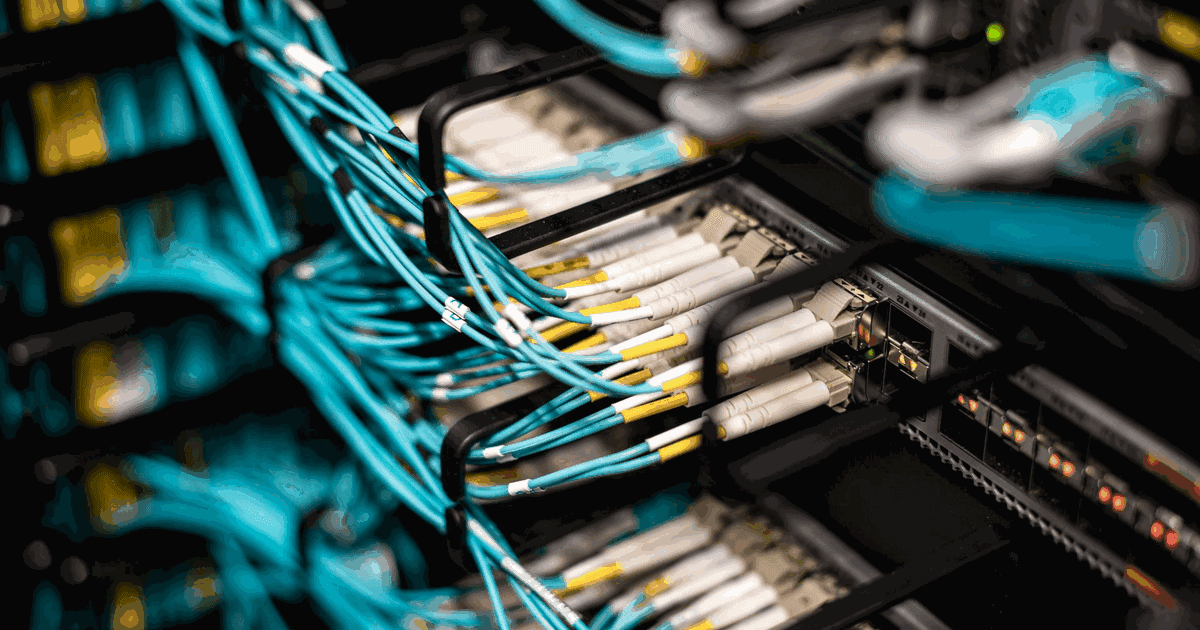
Industrial IoT connects machines, sensors, and devices across the factory floor, generating continuous streams of operational data. This connectivity allows manufacturers to monitor equipment performance, track production output, and identify process deviations in real time. Smart automation systems built on IIoT infrastructure give operations teams the visibility they need to act quickly and make better decisions. The physical layer underpinning this connectivity, including cabling standards and network architecture, determines how reliably data reaches its destination, which is why our resource on copper versus fibre cabling is a valuable reference for manufacturers planning IIoT deployments.
AI and Machine Learning
AI and machine learning are enabling manufacturers to move beyond reactive operations toward predictive and prescriptive intelligence. AI algorithms can analyse production data to identify quality issues before they escalate, optimise machine settings for efficiency, and forecast maintenance needs. This level of intelligence is a defining feature of advanced smart factory automation systems.
Machine Vision and Quality Inspection
Machine vision systems use cameras and AI-powered image analysis to inspect products at speed and scale that human inspection cannot match. These systems can detect surface defects, dimensional inconsistencies, label errors, and assembly faults with high accuracy. Machine vision is becoming a standard component of quality control in modern manufacturing environments. Manufacturers looking to extend visual monitoring across their facilities should also consider how CCTV solutions complement machine vision by providing broader facility surveillance, perimeter security, and operational oversight beyond the production line itself.
Industrial Control Systems
Programmable logic controllers, distributed control systems, and supervisory control and data acquisition platforms form the operational backbone of automated factories. These systems coordinate machine behaviour, manage process variables, and maintain production stability. Reliable industrial control systems are essential for safe and consistent automated operations.
Predictive Maintenance and Data Analytics
Predictive maintenance uses sensor data and analytical models to identify signs of equipment degradation before a failure occurs. By shifting from scheduled to condition-based maintenance, manufacturers can reduce unplanned downtime, extend asset life, and lower maintenance costs. The World Economic Forum's research on advanced manufacturing highlights how data-driven approaches are helping lighthouse factories achieve measurable improvements in productivity and sustainability.
Benefits of Industrial Automation for UAE Manufacturers
Higher Production Efficiency
Automated systems can operate continuously with consistent speed and precision, significantly increasing throughput compared to manual production. By removing bottlenecks and reducing idle time, manufacturers can meet higher output targets without proportional increases in resource consumption.
Improved Product Quality
Automation reduces the variability introduced by manual processes. Machine vision, precise control systems, and AI-driven quality checks ensure that products consistently meet defined specifications, reducing rework, scrap rates, and customer complaints.
Reduced Operational Errors
Human error is a major source of production inefficiency and quality failures. Automated systems follow programmed instructions with precision, eliminating many of the errors associated with repetitive manual tasks and reducing the cost of non-conformance.
Predictive Maintenance and Less Downtime
By monitoring equipment health in real time, industrial automation companies in Dubai and across the UAE are helping manufacturers shift from costly reactive maintenance to predictive approaches. This reduces unexpected breakdowns, improves asset utilisation, and keeps production lines running more reliably.
Improved Workplace Safety
Automation removes workers from hazardous environments, including areas with extreme temperatures, heavy machinery risks, or chemical exposure. Collaborative robots and automated guided vehicles can take on physically demanding or dangerous tasks, improving overall workplace safety and reducing injury rates. Complementary technologies such as access control systems further enhance safety by restricting entry to restricted or automated zones, ensuring that only authorised personnel can enter areas where automated machinery is operating.
Real-Time Operational Visibility
Connected automation platforms provide operations teams with live dashboards showing production rates, machine status, quality metrics, and energy consumption. This real-time visibility enables faster decision-making and more effective management of complex production environments.
Greater Scalability and Competitiveness
Automated production lines can be reconfigured more quickly than manual operations to accommodate new products, volumes, or market demands. This flexibility allows manufacturers to scale operations efficiently and respond to changing customer requirements without major disruption.
How Smart Manufacturing Is Changing UAE Factories
Smart manufacturing goes beyond automating individual machines. It connects the entire production environment, from sensors and equipment on the factory floor to enterprise systems and cloud analytics platforms, into a unified operational intelligence layer.
Digital twins, which are virtual replicas of physical assets and processes, allow manufacturers to simulate changes before implementing them. This reduces risk and accelerates innovation. AI-driven decision-making tools can recommend operational adjustments based on live data, reducing reliance on manual analysis and expert intuition.
The integration of IT and OT systems is a defining characteristic of smart manufacturing. When operational technology data flows into enterprise platforms, manufacturers gain a holistic view of performance, costs, and opportunities that was previously unavailable. Industrial automation trends in UAE are moving clearly in the direction of this connected, data-driven factory model.
The Role of IoT in Manufacturing Automation
Connected Machines and Sensors
IIoT sensors embedded in equipment capture data on temperature, vibration, pressure, speed, and energy consumption. This continuous monitoring creates a detailed operational picture that supports both immediate response and longer-term analysis.
Real-Time Production Monitoring
Connected systems allow managers to track production performance against targets in real time. Deviations from expected outputs or quality levels can be identified and addressed quickly, reducing waste and protecting delivery schedules.
Predictive Maintenance
IoT-enabled predictive maintenance systems analyse equipment sensor data to identify patterns that precede failures. By alerting maintenance teams before a breakdown occurs, these systems help manufacturers avoid costly unplanned downtime and extend the operational life of valuable assets.
Asset and Resource Management
IoT platforms provide manufacturers with accurate, real-time data on asset location, utilisation, and condition. This information supports better resource planning, reduces idle asset costs, and helps optimise energy and material consumption across the production environment.
Challenges of Implementing Industrial Automation
Adopting industrial automation is not without challenges. Manufacturers should understand and plan for the following:
• Initial investment: Automation technology, integration, and deployment require significant upfront capital. A clear ROI model and phased investment plan can help manage this.
• Legacy infrastructure: Older equipment may not be compatible with modern automation platforms without upgrades or middleware solutions.
• Skills and workforce requirements: Automation demands new technical skills in areas such as data analysis, robotics programming, and system integration.
• System integration: Connecting automation platforms with existing ERP, MES, and quality management systems requires careful planning and skilled implementation.
• Cybersecurity risks: As noted by NIST guidance on operational technology security, connected industrial environments introduce cyber risks that must be managed through appropriate controls, network segmentation, access management, and monitoring.
• Employee training and change management: Automation changes workflows and roles. Effective training and communication are essential to ensure workforce adoption and minimise resistance.
How UAE Manufacturers Can Start Their Automation Journey
Identify High-Impact Processes
Begin by mapping production workflows and identifying the processes that cause the most downtime, errors, rework, or cost. Targeting these high-impact areas first delivers the fastest measurable improvements and builds confidence in the automation programme.
Assess Existing Infrastructure
Evaluate current equipment, network connectivity, data systems, and facility layout. Understanding what exists helps identify integration requirements, compatibility challenges, and the scalability of potential smart automation solutions.
Set Measurable Automation Goals
Define specific, quantifiable objectives before selecting technology. Goals might include reducing defect rates, increasing line throughput, cutting maintenance costs, or improving safety metrics. Clear targets allow manufacturers to evaluate technology options objectively and measure success accurately.
Choose Scalable Technologies
Select automation solutions that can grow with the business. Modular robotics platforms, cloud-connected IoT systems, and open-standard control architectures allow manufacturers to expand capabilities incrementally without replacing entire systems.
Train Employees and Build Technical Skills
Invest in structured training programmes that build the technical competencies required to operate, maintain, and optimise automated systems. Upskilling existing staff reduces dependency on external support and creates internal champions for the automation programme.
Monitor Performance and Optimise Continuously
Use data collected by automated systems to track performance against defined goals. Regular review cycles allow manufacturers to identify further improvement opportunities and ensure that the automation programme continues to deliver measurable value over time.
The Future of Industrial Automation in UAE
The future of manufacturing in UAE will be shaped by the convergence of AI-powered production systems, advanced robotics solutions, Industrial IoT, digital twins, and edge computing. Factories will become increasingly autonomous, with machines capable of self-optimisation and real-time adaptation to changing conditions.
As industrial automation trends in UAE continue to evolve, manufacturers that invest in connected, intelligent systems today will be better positioned to compete in global markets, meet rising quality standards, and operate with greater resilience and agility.
The UAE's strong government support, growing technology ecosystem, and strategic industrial ambitions make this an ideal environment for manufacturers to embrace the next generation of Industry 4.0 automation solutions.
Conclusion
Industrial automation is no longer a future consideration for UAE manufacturers. It is a present and growing business priority. By combining robotics, AI, IoT, machine vision, and data analytics, manufacturers can improve operational efficiency, product quality, workplace safety, and long-term competitiveness. Whether you are beginning your automation journey or looking to scale existing capabilities, the right technology partner and a clear strategic approach can make the difference.
VegaDigital helps businesses explore automation and digital technology solutions designed to improve operational efficiency, connectivity, and scalability. Our team works with manufacturers to assess existing infrastructure, identify the right automation approach, and implement solutions that deliver measurable results. Connect with our technology experts through our contact page to begin your industrial transformation journey. You can also explore our project portfolio to see how we have supported businesses across the UAE with smart technology solutions.
Frequently Asked Questions
What is industrial automation?
Industrial automation uses technology, control systems, robotics, and software to perform manufacturing tasks with minimal human intervention. It ranges from basic programmable machines to advanced smart systems capable of real-time monitoring, self-optimisation, and data-driven decision-making across the entire production environment.
Why is industrial automation important for manufacturing in UAE?
Industrial automation helps UAE manufacturers reduce operational costs, improve product quality, increase throughput, and compete globally. With the UAE's Operation 300bn strategy targeting AED 300 billion in industrial GDP by 2031, automation is central to achieving the country's long-term manufacturing ambitions and economic diversification goals.
How is automation transforming UAE factories?
Automation is connecting UAE factory floors through Industrial IoT, robotics, AI, and data analytics platforms. These smart factory automation systems enable real-time production monitoring, predictive maintenance, quality inspection, and operational visibility, helping manufacturers shift from reactive management to data-driven, continuously optimised production environments.
What are the benefits of industrial automation for manufacturers?
Key benefits include higher production efficiency, improved product quality, reduced operational errors, predictive maintenance, better workplace safety, real-time operational visibility, greater scalability, and improved competitiveness. These outcomes help UAE manufacturers lower costs, meet quality standards, and respond more flexibly to changing market demands.
What technologies are used in industrial automation?
Core technologies include industrial robotics, Industrial IoT, AI and machine learning, machine vision, programmable logic controllers, distributed control systems, digital twins, predictive maintenance platforms, edge computing, and cloud analytics. Together these form the foundation of Industry 4.0 automation solutions used in modern UAE manufacturing, supported by robust structured cabling infrastructure that ensures reliable connectivity across the factory floor.
What is smart manufacturing?
Answer: Smart manufacturing connects machines, sensors, data platforms, and AI across the entire production environment to enable real-time monitoring, AI-driven decision-making, digital twin simulation, and IT-OT integration. It creates a unified operational intelligence layer that allows factories to operate with greater precision, efficiency, and adaptability than traditional approaches allow.
How does IoT improve manufacturing automation?
Industrial IoT connects equipment and sensors to generate continuous operational data streams, supporting real-time production monitoring, predictive maintenance, asset management, and process optimisation. IoT-enabled visibility allows manufacturers to identify inefficiencies faster, reduce unplanned downtime, and make more informed decisions, provided unified communication systems are in place to support coordinated operational response across teams.
What is Industry 4.0 in UAE?
Industry 4.0 in UAE refers to the fourth industrial revolution, integrating AI, IoT, robotics, and advanced analytics into manufacturing. The UAE Industry 4.0 initiative, supported by the Ministry of Industry and Advanced Technology, accelerates digital transformation across the industrial sector to build a smarter, more competitive manufacturing economy.
What are the challenges of implementing industrial automation?
Key challenges include high initial investment, legacy equipment compatibility, skills gaps, system integration complexity, cybersecurity risks in connected OT environments, and change management. Manufacturers should address these through phased investment plans, infrastructure assessments, workforce training programmes, and appropriate network and cabling infrastructure to support reliable connectivity throughout the facility.
What is the future of industrial automation in UAE?
The future combines AI-powered production, advanced robotics solutions, Industrial IoT, digital twins, edge computing, and autonomous operations. UAE manufacturers investing in these technologies now will build the operational resilience, flexibility, and intelligence needed to compete in global markets and meet the evolving demands of modern industry, supported by comprehensive annual maintenance contract services that keep critical automation systems running reliably.