
Modern access control systems help Dubai offices prevent unauthorised entry, protect sensitive areas, and monitor access in real time. Discover how smart, integrated security solutions create safer and more secure workplaces across the UAE.
Access control systems in Dubai are no longer a luxury reserved for banks or government buildings. Today, every office, whether a startup in Business Bay or a corporate headquarters in DIFC, needs a reliable way to control who enters, when, and where. Traditional locks and keys offer a basic level of protection, but they cannot track access, revoke credentials instantly, or alert security teams in real time. This article explains what modern access control systems are, how they work, and why they are the first line of defence for any office in the UAE.
Key Takeaways
• Traditional locks are no longer sufficient for modern office security. Access control systems UAE provide authentication, real-time monitoring, and instant credential management that physical keys cannot offer.
• Biometric access control, RFID cards, mobile credentials, and smart locks give offices flexible options to match their specific security requirements and budget.
• Integrating access control with CCTV, alarms, and intercom systems creates a layered security strategy that protects people, assets, and sensitive business areas more effectively.
• Cloud-based access management platforms allow remote monitoring, instant updates, and scalable control across single or multiple office locations.
What Is an Access Control System?
An access control system is a security technology that manages and restricts entry to buildings, offices, or specific areas. Instead of relying on a physical key, authorised users authenticate their identity using a credential such as a card, PIN, fingerprint, or smartphone. The system verifies the credential and either grants or denies access based on pre-defined rules.
Modern access management solutions go far beyond simple door locks. They log every entry and exit, send alerts for unusual activity, allow administrators to add or remove users instantly, and integrate with CCTV and other security platforms. According to ASIS International, evolving workplace security threats have made structured access management a foundational requirement for organisations of all sizes.
How Access Control Systems Work
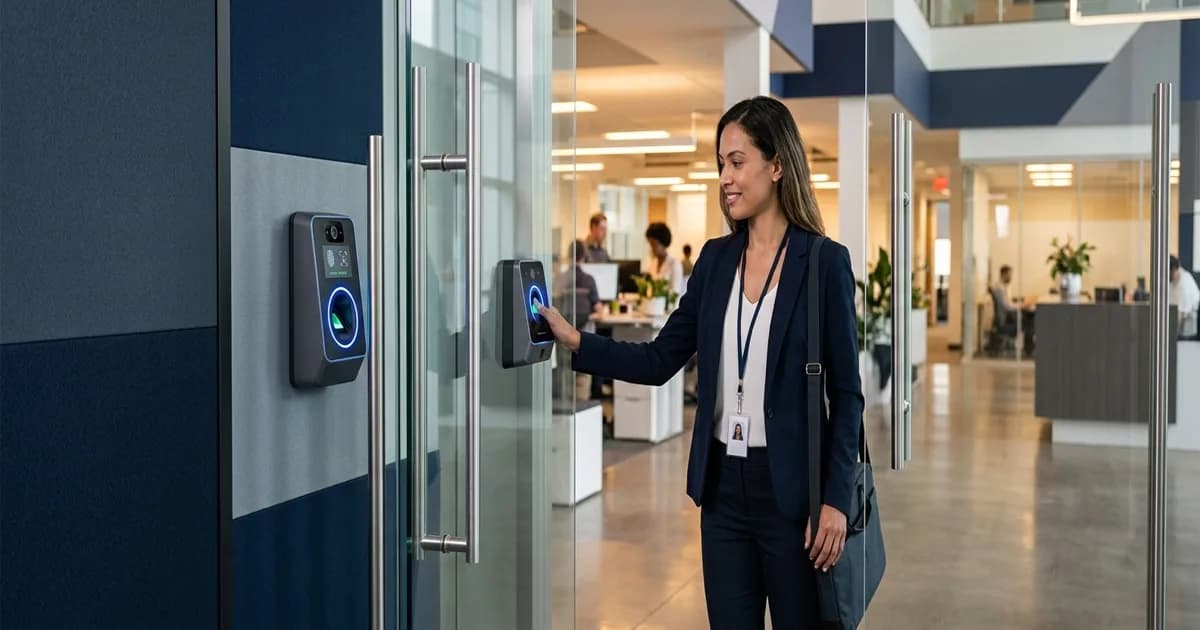
A typical access control system consists of three core components: a credential, a reader, and a control panel. The credential is what the user presents, such as a card, PIN, or biometric scan. The reader captures this credential and sends it to the control panel, which checks it against an authorised user database. If the credential matches, the door lock or barrier releases. The entire process happens in under a second.
Most modern systems connect to centralised software or a cloud platform, allowing administrators to manage access rules, review logs, and receive alerts from any device. This is what makes smart access management solutions so valuable for businesses with multiple floors, departments, or office locations.
Access Control vs Traditional Locks and Keys
Traditional locks have clear limitations. Keys can be copied, lost, or stolen without the office knowing. When an employee leaves, rekeying every lock is costly and time-consuming. With a door access control system, revoking access takes seconds. Audit trails show exactly when and where each credential was used. This level of visibility and control is impossible with physical keys alone.
Why Offices Need Modern Access Management
Office environments today house sensitive data, expensive equipment, and confidential records. Unauthorised access to any of these areas can result in data breaches, theft, or compliance failures. A well-implemented access control solution allows businesses to enforce security policies, protect restricted zones, and maintain a clear record of who accessed what and when.
Types of Access Control Systems for Offices
Biometric Access Control
Biometric access control systems for offices use physical characteristics such as fingerprints, iris patterns, or facial recognition to verify identity. Because biometric data is unique to each individual, it is extremely difficult to share or replicate. A face detection attendance system or fingerprint reader eliminates the risk of buddy punching and ensures only authorised personnel can enter restricted areas. The NIST Digital Identity Guidelines recognise biometric authenticators as a strong factor in multi-factor authentication frameworks, which supports their use in high-security office environments.
RFID and Proximity Card Systems
RFID and proximity card systems are among the most widely deployed solutions for commercial offices. Employees are issued a card or fob that communicates wirelessly with a reader mounted at the door. These systems are easy to manage, cost-effective, and suitable for offices with a large number of users. Working with an experienced door access control system supplier in Dubai ensures your RFID solution is designed to scale with your workforce and integrate with your existing security infrastructure.
PIN and Keypad Access
PIN-based systems require users to enter a numeric code to gain entry. They are a simple and affordable option for smaller offices or low-security internal doors. However, PINs can be shared or observed, which makes them less secure when used as a standalone method. Combining a PIN with a card or biometric credential creates a stronger two-factor authentication approach.
Mobile and Digital Credentials
Mobile credentials allow users to unlock doors using their smartphone via Bluetooth or NFC. This approach is growing rapidly because it eliminates the need for physical cards and allows administrators to issue or revoke credentials remotely. Employees no longer need to carry a separate access card, and businesses benefit from reduced card printing and management costs.
Smart Locks and Door Access Systems
Smart locks combine electronic locking mechanisms with software management platforms. They can be controlled remotely, scheduled to lock or unlock at specific times, and integrated with other building security systems. For offices looking to modernise entry points without a full infrastructure overhaul, smart locks offer a practical and scalable starting point.
Visitor Management Systems
A visitor management system digitises the process of registering, authenticating, and tracking guests and contractors. Visitors check in at a kiosk or via a pre-registration link, receive a temporary credential, and are granted access only to approved areas. This replaces paper visitor logs with an auditable digital record and improves the overall security posture of the office reception area.
Why Access Control Systems Are Essential for Office Security
Prevent Unauthorised Entry
The most fundamental benefit of any access control system UAE deployment is keeping unauthorised individuals out of office premises. Whether the threat is an external intruder or an ex-employee attempting to re-enter, a properly configured system ensures only verified users can pass through controlled entry points. According to the Verkada Global State of Security Report, physical security concerns remain a top priority for organisations, with unauthorised access ranked as one of the most common threats facing workplaces today.
Protect Sensitive Areas
Not every employee needs access to every area. Server rooms, finance departments, executive floors, and records storage areas all require restricted access. An access control system allows administrators to create zone-based permissions so only relevant personnel can enter specific areas. This protects intellectual property, financial data, and IT infrastructure from both external and internal threats.
Improve Employee Safety
Access control contributes directly to employee safety by ensuring that only authorised individuals can enter office premises. In the event of a security incident, real-time lockdown capabilities allow administrators to restrict all access instantly. Some systems also include emergency evacuation features that can unlock all exits simultaneously, supporting safe and rapid building egress.
Monitor Access Activity
Every credential swipe, biometric scan, or PIN entry generates a timestamped log. This creates a detailed audit trail that security teams and HR departments can use to investigate incidents, verify attendance, and ensure compliance with internal security policies. A face recognition attendance system UAE can combine access control with workforce attendance tracking in a single integrated platform.
Manage Visitors and Contractors
Offices receive a constant flow of visitors, delivery personnel, and third-party contractors. Without a structured system, managing their access is difficult and prone to error. A visitor management system integrated with access control allows businesses to pre-register guests, issue time-limited credentials, and automatically expire access when the visit concludes. This significantly reduces the risk of unauthorised individuals remaining on-site beyond their authorised period.
Benefits of Access Control Systems for Offices
Stronger Workplace Security
A modern access control system Dubai creates a defined security perimeter around office premises and internal zones. It ensures that only verified individuals can enter, reducing the risk of theft, vandalism, and unauthorised data access.
Better Employee and Visitor Safety
By controlling who can enter office buildings and specific areas, access control systems create a safer working environment for employees, clients, and visitors. Emergency lockdown and evacuation features add an additional layer of safety management.
Centralised Access Management
Administrators can manage all doors, users, and credentials from a single platform. Adding a new employee, updating access permissions, or revoking a credential for a departing staff member takes seconds rather than hours.
Real-Time Monitoring and Alerts
Cloud-connected systems provide live dashboards showing who is in the building, which doors are open, and whether any unauthorised access attempts have been made. Instant alerts notify security teams of suspicious activity as it happens.
Detailed Access Records
A complete audit log of all access events supports incident investigations, regulatory compliance, and internal audits. These records are tamper-resistant and stored securely, either locally or in the cloud.
Easier Employee Onboarding and Offboarding
When a new employee joins, access credentials can be provisioned instantly with the correct zone permissions. When an employee departs, access can be revoked immediately across all entry points without any physical rekeying. This reduces administrative burden and eliminates the security gap that often exists with traditional key management.
Scalable and Future-Ready Security
Modern biometric access control systems for offices are designed to scale. Whether a business is expanding to a new floor, a new building, or a new city, cloud-based platforms allow administrators to add new locations and users without replacing existing infrastructure.
How Access Control Works with Other Office Security Systems
Integration with CCTV and Video Surveillance
Linking access control with a CCTV and video surveillance system allows security teams to retrieve camera footage associated with specific access events. If an unauthorised entry attempt is flagged, the system can automatically pull video from the relevant camera and time stamp, giving security teams the visual evidence they need to respond effectively.
Integration with Alarm Systems
Access control systems can trigger alarm responses when a door is forced open, held ajar for too long, or accessed outside of permitted hours. Connecting access control with an intruder alarm platform creates a coordinated security response that is far more effective than either system operating in isolation.
Integration with Intercom and Visitor Management
Integrating access control with an intercom system allows reception teams to verify visitor identity visually before granting remote door release. This adds a human verification layer to the authentication process, which is particularly important for high-security reception areas or executive floors.
Integration with Building Management Systems
In smart office environments, access control can connect with building management systems to automate lighting, HVAC, and energy management based on occupancy. When the last authorised user exits a zone, the system can automatically adjust environmental controls, reducing energy consumption and operating costs.
Cloud-Based vs On-Premise Access Control Systems
Benefits of Cloud-Based Access Control
Cloud-based platforms allow administrators to manage access from anywhere using a web browser or mobile app. Firmware and security updates are applied automatically, reducing the risk of vulnerabilities. Scalability is straightforward because new locations and users can be added without on-site server infrastructure. Real-time monitoring and reporting are available across all connected sites from a single dashboard.
When On-Premise Access Control May Be Suitable
Some organisations with strict data sovereignty requirements or limited internet connectivity may prefer an on-premise access control solution. This keeps all access data within the organisation's own network and server infrastructure. On-premise systems may also be preferred in regulated industries where cloud data storage is subject to compliance restrictions.
Choosing the Right Management Model
The choice between cloud and on-premise access control depends on the organisation's data privacy policies, IT infrastructure, connectivity reliability, and long-term scalability requirements. Businesses with multiple locations and a distributed workforce will generally benefit most from a cloud-based platform, while organisations with highly sensitive data or specific regulatory requirements may find an on-premise solution more appropriate.
When deploying any connected access control system, cybersecurity must be a primary consideration. NIST guidelines recommend using encrypted communications, strong authentication for system administrators, regular software updates, and network segmentation to protect access control infrastructure from cyber threats.
How to Choose the Right Access Control System in Dubai for Your Office
Selecting the best access control system in Dubai for your office requires careful evaluation of several factors. Consider the following when planning your deployment:
• Office size and number of users: Larger offices with many employees require scalable platforms with centralised management.
• Security requirements: High-security areas may require multi-factor authentication combining biometrics with cards or PINs.
• Authentication methods: Choose between biometric, RFID, mobile, PIN, or a combination based on user experience and security needs.
• Scalability: Select a system that can grow with your organisation without requiring complete replacement.
• Integration capabilities: Ensure the system can connect with your existing CCTV, alarms, intercom, and building management infrastructure.
• Cloud vs on-premise management: Evaluate your data privacy requirements, IT capability, and connectivity before choosing a management model.
• Data privacy and cybersecurity: Verify that biometric data is stored securely and that the system meets relevant data protection regulations in the UAE.
• Maintenance and support: Choose a provider who offers ongoing maintenance, technical support, and regular system updates to keep your access control platform performing reliably.
The Future of Access Control Systems
The access control system UAE market is evolving rapidly. Key trends shaping the future of office access management include:
• Mobile credentials: Smartphones replacing physical cards as the primary access credential.
• AI-powered security analytics: Machine learning algorithms detecting unusual access patterns and flagging potential threats automatically.
• Cloud-based access management: Remote administration and real-time visibility across multiple locations from a single platform.
• Biometric authentication: A biometric attendance machine UAE combining access control and workforce management in one integrated device.
• Touchless access: Hands-free entry using face recognition or mobile credentials, increasingly important in health-conscious office environments.
• Integrated physical and digital security: Connecting physical access control with IT security platforms to create a unified identity and access management strategy.
• Smart office environments: Access control triggering automated responses across lighting, HVAC, and energy management systems for a truly intelligent workplace.
Conclusion
An access control system Dubai is not simply a door security solution. It is the first layer of a comprehensive office security strategy that connects physical access with employee safety, visitor management, CCTV surveillance, and smart building technologies. Organisations that invest in modern, integrated access management gain greater visibility, stronger protection, and the operational flexibility to manage security at scale. Whether you are equipping a single office or a network of facilities across the UAE, the right access control solution makes your workplace safer, smarter, and more resilient. Connect with the VegaDigital team to explore access control and integrated security solutions designed for modern offices.
Frequently Asked Questions
What is an access control system?
An access control system is a security technology that manages who can enter a building, office, or restricted area. Users authenticate with a credential such as a card, PIN, fingerprint, or smartphone. The system verifies the credential and grants or denies access based on pre-defined permission rules.
Why are access control systems important for offices?
Offices house sensitive data, valuable equipment, and confidential records. A modern office security technology solution prevents unauthorised entry, protects restricted zones, maintains detailed access logs, and enables instant credential revocation when an employee leaves, none of which traditional locks and keys can provide.
How do office access control systems work?
A user presents a credential such as a card, fingerprint, or PIN to a reader at the entry point. The reader sends this data to a control panel, which checks it against an authorised user database. If the credential matches and permission is granted, the electronic lock releases within a second.
What are the different types of access control systems?
The main types include biometric access control using fingerprints or facial recognition, RFID and proximity card systems, PIN and keypad entry, mobile credentials via smartphone, smart locks, and visitor management systems. Many offices combine two or more methods to create a stronger multi-factor authentication approach.
What are the benefits of commercial access control systems?
Key benefits include stronger workplace security, protection of sensitive areas, real-time monitoring and alerts, detailed audit logs, easier employee onboarding and offboarding, visitor management, and scalability. Integrating access control with CCTV and alarms creates a layered security strategy that is far more effective than any single system alone.
Is biometric access control secure?
Biometric access control is among the most secure authentication methods available because biometric data is unique to each individual and cannot be shared or duplicated like a key or PIN. The NIST Digital Identity Guidelines recognise biometric authenticators as a strong factor in multi-factor authentication, supporting their use in high-security office environments.
What is the difference between access control and traditional locks?
Traditional locks rely on physical keys that can be copied, lost, or stolen without detection. A modern access controller provides digital credentials that can be instantly revoked, generates an audit trail of all access events, and connects with CCTV and alarm systems for a coordinated, real-time security response.
Can access control systems integrate with CCTV?
Yes. Linking access control with video surveillance allows security teams to automatically retrieve camera footage linked to specific access events. Businesses that also deploy an intercom system alongside their security infrastructure benefit from an additional visual verification layer, making incident investigation faster and more reliable.
Should offices choose cloud-based or on-premise access control?
Cloud-based systems offer remote management, automatic updates, and easy scalability across multiple locations, making them ideal for most modern offices. On-premise systems suit organisations with strict data sovereignty requirements or regulated industries where cloud storage is subject to compliance restrictions. Evaluate your data privacy policies and IT infrastructure before deciding.
How do I choose the right access control system for my office?
Consider office size, number of users, security requirements, preferred authentication methods, scalability needs, integration with existing CCTV and alarm systems, cloud versus on-premise management, data privacy compliance, and ongoing maintenance support. Working with VegaDigital, an experienced security solutions provider in the UAE, ensures your system is designed and deployed correctly from the start.