
Plan commercial security cameras for UAE warehouses, retail, clinics and offices. Compare specs, approvals, storage, costs and how to choose a CCTV installer.
Commercial security cameras do far more than record incidents. In the UAE they protect stock, staff and visitors, support insurance claims and help businesses meet approval rules set by each emirate. Yet many buyers still choose cameras from a price list instead of a site plan. This guide explains how to plan a system facility by facility. You will learn which camera types suit warehouses, shops, clinics and offices, how to size storage, what approvals apply and how to judge an installer before you sign.
Key Takeaways
The right commercial security cameras depend on the facility type, lighting, risk and approval category, not on megapixels alone.
A complete surveillance system covers cameras, recording, storage, network, power and monitoring, so plan all six together.
Choose a CCTV installation company that designs, installs and maintains the system with its own team and holds approvals in every emirate you operate in.
What a Commercial Surveillance System Includes
A commercial surveillance system is a chain of connected parts. If one link is weak, the whole system underperforms. Buyers often focus on camera brands, but most failures we see in the field come from poor storage planning, overloaded networks or missing maintenance. Before you compare quotes, make sure every proposal covers the same six building blocks. This lets you compare like with like and spot gaps early.
Think of the system in layers. Commercial security cameras capture the scene, recorders keep it, the network carries it, power keeps it running, software makes it searchable and people act on it. When a supplier quotes only for the first layer, the remaining costs appear later as variations. A clear scope at the start avoids disputes during installation and makes the approval submission far smoother.
Cameras and Lenses
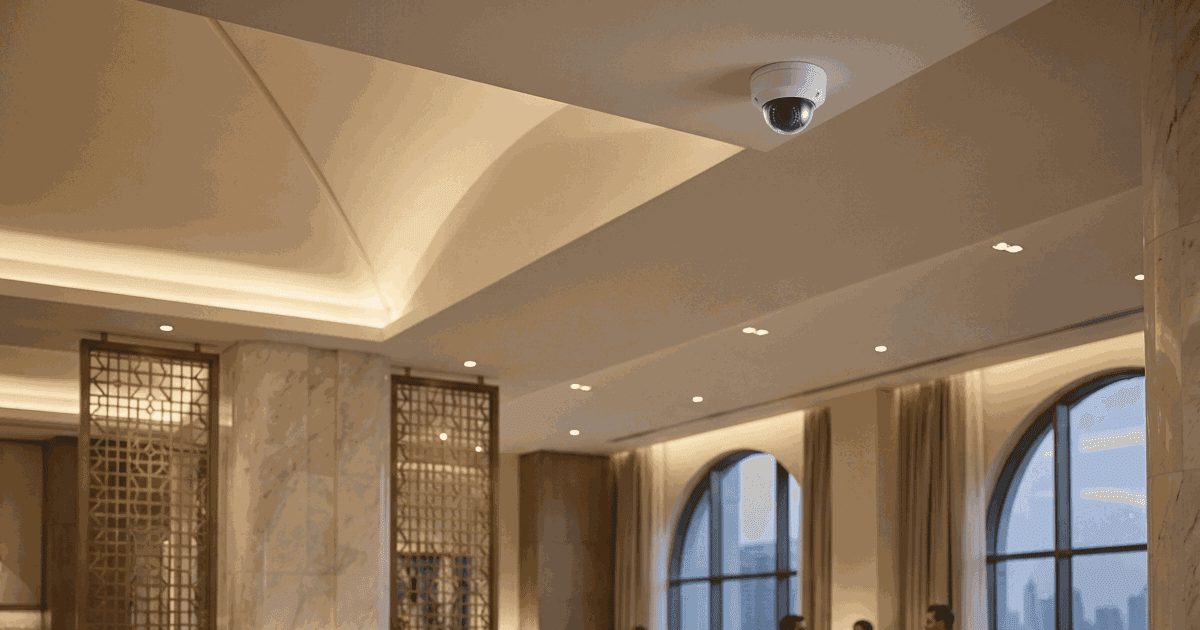
Cameras are the eyes of the system. Dome cameras suit ceilings in lobbies and corridors. Bullet cameras reach further along fences and car parks. PTZ cameras pan, tilt and zoom across large yards. Fisheye cameras cover open retail floors with one device. Lens choice matters as much as the body. A wide lens shows more area but less detail, while a narrow lens captures faces and number plates at a distance.
Recording, Storage and Video Management
Network video recorders store footage on site, while video management software lets teams search, export and view many cameras at once. Larger sites often combine both, with a central server and edge storage on each camera as backup. Look for support for the ONVIF interoperability standard so cameras and software from different brands can work together as the site grows.
Network, Power and Monitoring
IP cameras send video over the data network and usually draw power through PoE switches. A poorly designed network drops frames when many cameras stream at once. That is why the cabling choice between a copper or fibre backbone matters for bigger buildings. Finally, decide who watches the footage: a guard room, a central control room or a remote monitoring team. Monitoring design shapes screen layout, alarm rules and user permissions.
Choosing Commercial Security Cameras by Facility Type
No single camera package suits every business. The risks inside a logistics warehouse are very different from those in a pharmacy or a residential compound. Start with the facility type, list the areas that matter most, then choose camera types for each area. The sections that follow summarise typical choices our design team uses as a starting point. Every site still needs a physical survey, because lighting, ceiling height and layout change the final design.
Warehouses and Logistics Sites
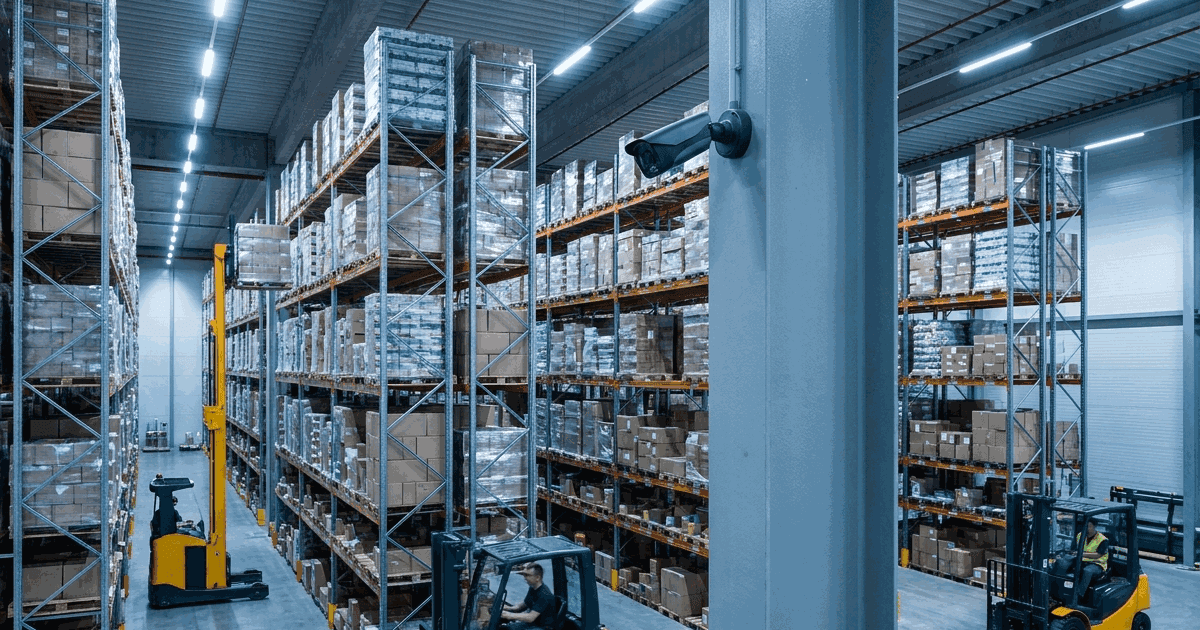
Warehouses need coverage of loading bays, racking aisles, perimeter fences and vehicle gates. Long aisles suit narrow field bullet cameras or corridor mode views. Loading bays face harsh backlight when shutters open, so wide dynamic range is essential. Outdoor yards often need PTZ cameras with strong infrared range. Linking gate cameras with ANPR cameras at vehicle entrances helps track trucks in and out. High racking also blocks views, so cameras should be mounted to look down each aisle rather than across it. Warehouses running night shifts should test every camera after dark, since sodium lighting and open doors create very uneven light levels.
Retail Stores and Malls
Retailers focus on tills, entrances, high value shelves and stockrooms. Fisheye cameras give a wide overview of the shop floor, while fixed domes above tills capture clear transaction detail. Many retailers now use people counting and heat maps to measure footfall. Discreet designs matter too, because shoppers should feel safe rather than watched. Malls add further layers, including car park coverage, service corridors and central control rooms that manage hundreds of commercial security cameras across tenants. Retail chains benefit from a standard camera kit per store, which keeps spares, training and reporting simple across every branch.
Clinics, Hospitals and Pharmacies
Healthcare sites must balance security with patient privacy. Cameras belong at entrances, pharmacies, medicine stores, car parks and reception desks, not inside treatment rooms. Privacy masking can block sensitive zones within a camera view. Controlled drug areas usually need higher resolution and stricter access to recorded footage. Emergency departments and waiting areas benefit from audio free cameras with clear views of reception, since staff safety incidents often happen there. Keep an audit log of who views or exports footage, as healthcare data is especially sensitive.
Office Towers, Labour Accommodation and Industrial Yards
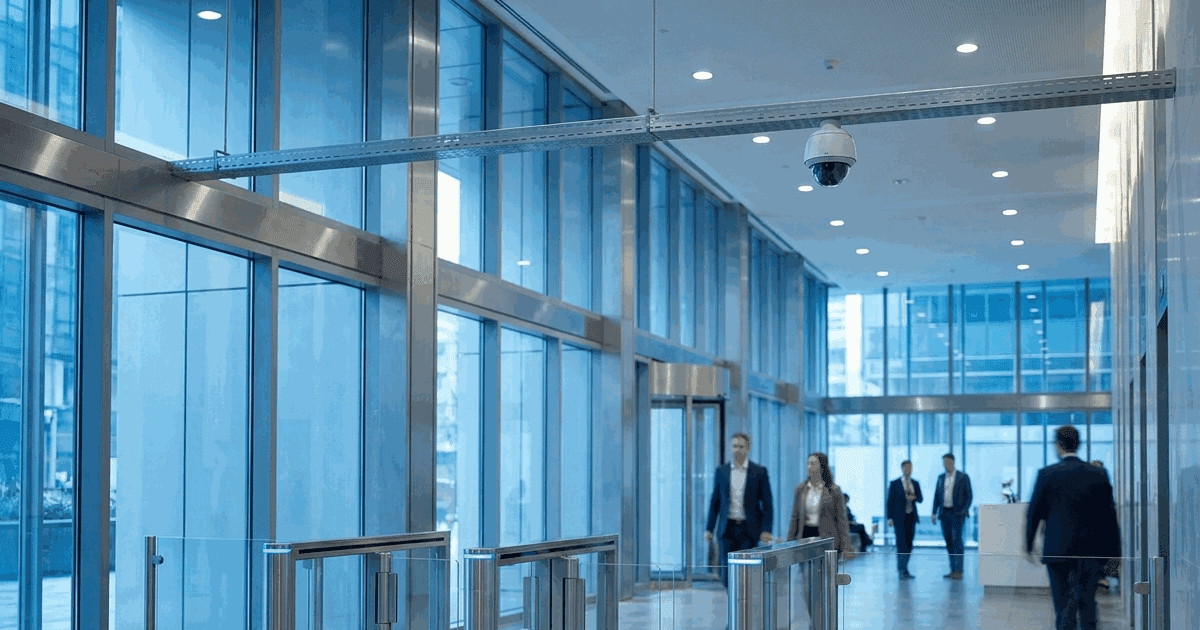
Office towers need lobby, lift, car park and plant room coverage, often tied to office access control at turnstiles. Labour accommodation needs robust vandal resistant domes in corridors, kitchens and gates. Industrial yards face dust, heat and long distances, so rugged housings and thermal cameras are common. Villa owners searching for a home security camera Dubai package need a simpler design, which this guide does not cover in depth.
Hotels, Schools and Mixed Use Buildings
Hotels need discreet coverage of lobbies, lift landings, back of house corridors and loading areas, while guest floors call for careful placement that respects privacy. Schools focus on gates, drop off zones, corridors and playgrounds, with strict rules on who can view footage of children. Mixed use buildings combine several of these profiles. In each case, map who owns which cameras and who may access recordings before installation starts, so responsibilities are clear from day one.
Resolution, Lenses and Storage Planning
Resolution sells cameras, but pixel density decides whether footage is useful. A 4MP camera covering a huge car park may capture less facial detail than a 2MP camera aimed at a single doorway. Good designers work backwards from the task. They ask whether each view must detect movement, recognise a known person or identify a stranger. Each task needs a different number of pixels on the target.
Pixel Density by Task
As a practical rule, general observation needs far fewer pixels per metre than identification. Entrances, tills and cash offices deserve identification level detail. Perimeters and open yards usually only need detection, supported by analytics that trigger alerts. Planning views this way often reduces the camera count while improving evidence quality.
Lens choice follows the same logic. Varifocal lenses let installers fine tune the view during commissioning, which is useful when layouts are not final. Fixed lenses cost less and suit standard corridors and doorways. For long car parks or perimeter fences, a dedicated long range camera usually outperforms adding several short range units. Ask your designer to show sample images at the planned distance before you approve the camera schedule.
Lighting, Glare and Night Performance
UAE sites face extreme contrast. Bright sun hits glass entrances while interiors stay dim, and car parks move from daylight to near darkness in minutes. Look for true wide dynamic range, not digital enhancement, on any camera facing doors or windows. At night, check infrared range against the real distance to the target. Many buyers discover too late that a camera rated for 30 metres of infrared shows only shadows beyond 15 metres in a dusty yard.
Heat also affects performance. Outdoor commercial security cameras should carry an operating temperature rating suited to UAE summers and housings rated to IP66 or IP67 for dust and water. Sunshields and correct mounting positions reduce internal heat and extend camera life.
Storage Maths You Can Check Yourself
Storage depends on bitrate, recording mode and retention days. A camera streaming at 4 Mbps records roughly 43 GB per day, so 30 days needs about 1.3 TB for that one camera. Multiply by camera count and add headroom for growth. Modern H.265 compression can cut storage needs substantially compared with older H.264 streams. Motion based recording saves space too, but check that your approval category allows it before relying on it.
2 Mbps: about 22 GB per day, about 0.65 TB for 30 days, about 1.9 TB for 90 days
4 Mbps: about 43 GB per day, about 1.3 TB for 30 days, about 3.9 TB for 90 days
8 Mbps: about 86 GB per day, about 2.6 TB for 30 days, about 7.8 TB for 90 days
Approvals Across the UAE: What Changes by Emirate
CCTV in the UAE is regulated at emirate level. Rules on who may install systems, which facilities need approval, how long footage is kept and how systems are inspected differ between authorities. A business with branches in several emirates cannot assume one design passes everywhere. Always confirm current requirements with the relevant authority before finalising the design, because rules and manuals are updated.
Dubai: SIRA
In Dubai, the Security Industry Regulatory Agency regulates the security industry, including CCTV design, installation and maintenance for many facility categories. Businesses in regulated categories must use an approved company and meet SIRA technical requirements. For a plain language summary, read what SIRA approval really means for your business.
Abu Dhabi, Sharjah, Ajman and Ras Al Khaimah
Abu Dhabi projects fall under the Monitoring and Control Centre operated with Abu Dhabi Police, which sets its own technical and connection requirements. Sharjah, Ajman and Ras Al Khaimah each apply their own approval processes. Vega Digital holds approvals across Dubai, Sharjah, Ajman, Abu Dhabi MCC and RAK GRA, so multi branch clients can work with one team rather than a different contractor in every emirate.
For portfolios across several emirates, create one design standard and then add the local requirements of each authority. This keeps camera models, software and training consistent while still meeting every approval. Keep a register of approval certificates, inspection dates and renewal deadlines for each site. Missing a renewal can delay trade licence processes or trigger penalties, so assign a clear owner for this register.
Privacy law applies everywhere. The UAE personal data protection framework treats identifiable footage as personal data. Clear signage, limited access to recordings and defined retention periods keep you on the right side of both approval rules and privacy duties.
Analytics, Monitoring and Integration
Modern commercial security cameras include analytics that watch footage so people do not have to. Line crossing, intrusion zones, loitering alerts and object left behind detection turn cameras from passive recorders into early warning tools. AI security cameras also filter false alarms caused by shadows, birds or swaying trees, which matters on large outdoor sites.
Analytics work best when they are tuned to the site. A loitering rule that suits a bank lobby will flood a busy mall with alerts. Ask your installer to test each rule during commissioning and document the settings. For a wider view of where the technology is heading, see how video analytics is changing security in smart cities.
Remote Monitoring and Control Rooms
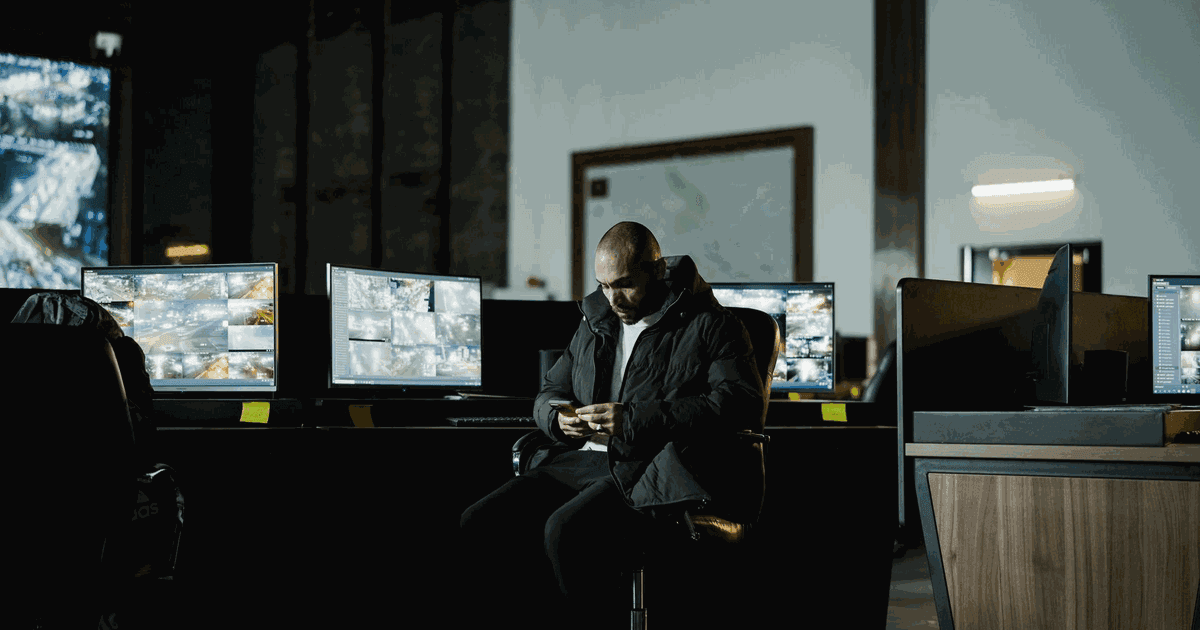
Large sites and multi branch businesses rarely watch every camera on site. Instead, footage flows to a central control room or a remote monitoring team. Operators see alerts from analytics, confirm what is happening and dispatch guards or call the police. Good control rooms show only the cameras that need attention, rather than a wall of static images nobody watches.
Remote access must be secure. Use encrypted connections, unique user accounts, two factor login where supported and role based permissions. Never expose recorders directly to the internet with default passwords, which remains one of the most common weaknesses in older installations.
Integration with Other Building Systems
Cameras become more valuable when they talk to other systems. A door forced alarm can pop up the nearest camera view. A vehicle plate read can open automated gate barriers for approved vehicles. A fire alarm can switch cameras to evacuation routes. Plan these links at design stage, because adding them later often means new licences, extra cabling and repeat commissioning.
Integration also improves reporting. Security managers can combine door events, alarm history and camera clips into one incident record. That saves hours during investigations and gives insurers and authorities a clear, time stamped account of what happened. Choose platforms that export evidence in standard formats with watermarking, so footage remains credible if a case goes further.
What Drives the Cost of a Commercial CCTV Project
Every quote reflects the same set of cost drivers, even when the totals look very different. Understanding them helps you compare proposals fairly and avoid cheap quotes that leave out essential work. We do not publish fixed prices, because two sites with the same camera count can differ greatly in cabling distance, mounting height and approval requirements.
The biggest hidden cost is usually cabling and containment in finished buildings. Storage is the second, especially where long retention is required. Licences for video management and analytics add recurring costs on some platforms. Ask every bidder to list quantities for cameras, cable metres, switches, storage capacity and licences. A quote that hides these numbers is hard to compare and harder to hold to account.
Think in lifetime cost, not purchase price. A cheaper camera that fails in summer heat, or a recorder that fills up in two weeks, costs more over five years than a correctly specified system. Include maintenance, software updates and eventual expansion in your budget from the start.
If budget is tight, phase the project rather than downgrading the design. Install the network backbone, recorders and storage for the full system first, then add commercial security cameras area by area. Start with entrances, cash handling and high value stock. This approach avoids rework, because later phases simply connect to infrastructure that is already sized correctly.
How to Evaluate a CCTV Installation Company
The installer matters as much as the hardware. A strong CCTV installation company designs the system around your risks, installs it neatly, commissions every view and supports it for years. A weak one sells boxes and disappears. Use the checks in this section when you compare a security camera installation service, whether you run one site or a regional portfolio.
Pay close attention to who does the work. Many firms subcontract installation to the lowest bidder, which leads to untidy cabling, poor labelling and slow support. Vega Digital uses its own design, installation and maintenance team for every project. Ask for references from similar facilities and request sample handover documents before you award the contract.
Finally, compare how each surveillance camera installation service handles approvals, training and the first year of support. A proposal that includes the approval submission, operator training and a defined defects period saves time and protects your budget after handover.
Red Flags in CCTV Proposals
A quote issued without any site visit or measured drawings.
Camera counts with no storage calculation or retention period stated.
Consumer grade cameras or recorders offered for a regulated commercial site.
No mention of approvals, inspections or who submits the paperwork.
Vague support terms with no response time or named maintenance team.
Any one of these points deserves a direct question. Two or more usually signal a supplier focused on the sale rather than the outcome.
Maintenance and AMC After Handover
Cameras sit in dust, heat and humidity every day. Without routine care, lenses blur, housings trap heat, hard drives fail and firmware falls behind on security patches. In many cases approval rules also expect systems to be kept in working order and inspected. Planned maintenance protects both your evidence and your compliance status.
A good annual maintenance contract covers scheduled visits, lens and housing cleaning, recording checks, storage health checks, firmware updates and response times for faults. It should also include a simple monthly report showing camera uptime and any issues found. Choose a provider that maintains the systems it installs, so there is no finger pointing between installer and maintainer.
Quarterly: clean lenses and housings, check every camera view and recording.
Twice a year: test storage health, UPS batteries and network switches.
Yearly: review camera positions against layout changes and update firmware.
Cybersecurity belongs in maintenance too. Every networked camera is a device that attackers can target. Change default passwords at installation, keep firmware current, disable unused services and review user accounts whenever staff leave. Ask your maintenance provider to include these checks in each visit report, so security gaps are closed before they become incidents.
Plan for renewal as well. Commercial security cameras typically serve for many years, but recorders, hard drives and software licences age faster. A maintenance partner who tracks equipment age can warn you before failures and help you budget replacements in stages rather than facing a sudden full upgrade.
Conclusion
The best commercial security cameras are the ones designed around your facility, your risks and your approval category. Plan the full surveillance system, from cameras and storage to network, integration and maintenance, before comparing prices. Check that your installer designs, installs and supports the system with its own team across every emirate you operate in.
Vega Digital has delivered security and smart technology projects for more than 110 clients. Book a free site survey with our team and receive a design matched to your facility, not a generic package. You can also explore our SIRA approved CCTV installation services.
Frequently Asked Questions
What are commercial security cameras?
They are professional grade IP cameras built for businesses. They offer higher durability, better low light performance, analytics and integration with recorders, access control and monitoring software than consumer cameras designed for homes.
How many cameras does a commercial building need?
It depends on entrances, floor area, risk zones and approval requirements. A site survey maps every critical area and viewing distance, then the designer selects the fewest cameras that still deliver the required detail.
Do I need SIRA approval for CCTV in Dubai?
Many facility categories in Dubai must use a SIRA approved company and meet SIRA technical requirements. Check your category with an approved installer. Our team explains the details in why businesses need SIRA approved CCTV systems.
How long should CCTV footage be stored?
Retention periods vary by emirate and facility category, and some sites need longer storage than others. Confirm the current requirement with your approval authority, then size storage with extra headroom for growth and higher resolution cameras.
Are IP cameras better than analog cameras for businesses?
For most businesses, yes. IP cameras deliver higher resolution, analytics, remote access and simpler expansion over the network. Existing analog cameras can still be reused temporarily during a phased upgrade with encoders or hybrid recorders, which spreads the cost.
How much does a commercial surveillance system cost in the UAE?
Cost depends on camera count, cabling distances, storage, licences, mounting heights and approvals. Ask each bidder for itemised quantities so you can compare proposals fairly and plan for maintenance over the system life.
Can commercial security cameras work with access control?
Yes. Integrated systems link door events, alarms and camera views, so operators see footage instantly when a door is forced or held open. Integration also speeds up investigations and reduces time spent searching recordings.
What network do IP cameras need?
IP cameras need managed PoE switches, enough bandwidth for all streams and a separate VLAN for security traffic. Our business network installation team designs switching and cabling so video never slows down office systems.
How often should business CCTV be maintained?
Most commercial systems benefit from quarterly preventive visits, with storage, UPS and firmware checks twice a year. Harsh outdoor sites with heavy dust or heat may need more frequent lens and housing cleaning.
Why choose an installer with its own team?
An in house team controls design quality, cabling standards and response times, with no handover gaps between contractors. Learn more about Vega Digital and our in house engineers, who design, install and maintain every system without subcontracting.