
Choosing a biometric attendance machine UAE employers can rely on sounds like a simple hardware decision. On a real site it rarely is.
Choosing a biometric attendance machine UAE employers can rely on sounds like a simple hardware decision. On a real site it rarely is. Dusty yards, sweaty hands after a summer shift, gloves and long queues at shift change all affect how each technology performs. This guide compares face and fingerprint terminals against those conditions, using six products Vega Digital lists. You will see where each model fits, what to test before you buy and how to protect biometric data once the terminals go live across your sites.
Key Takeaways
Face terminals suit dusty sites, hygiene sensitive areas and busy gates, while fingerprint terminals remain sensible for clean offices.
A biometric attendance machine UAE teams deploy should be sized from the busiest arrival window, not the daily average.
Treat biometric templates as personal data: give clear notice, restrict administrator access and delete records when people leave.
How does a biometric attendance machine UAE sites use actually work?
Both technologies turn a physical feature into a digital template. A fingerprint reader compares the ridges of a finger with a stored template. A face terminal captures the face with a camera, often with infrared help, and compares its measurements with enrolled records. The terminal then logs the person, the time and the device, and sends that event to attendance software.
The key difference is contact. A fingerprint reader needs a clean finger placed correctly on a sensor. A face terminal needs a clear view of the face at the right height and distance. That single difference explains most of the performance gaps you will see on site, and it should guide your choice before price does.
Many terminals also accept cards or PINs, so managers can give each group of staff a suitable method. Keep a backup credential for anyone whose fingerprint or face enrols poorly. Our access control and attendance projects usually combine several credential types for this reason.
How do dust, gloves, sun and sweat change the choice?
Offices are kind to fingerprint readers. Staff arrive with clean, dry hands, queues are short and the sensor stays in an air conditioned lobby. In these settings a fingerprint terminal is accurate, affordable and familiar to employees.
Industrial and outdoor sites are different. Construction workers and warehouse teams often have dusty, dry or cut fingertips, and manual work can wear ridges down over time. Sweat smears the sensor, dust builds up on the glass and gloves must come off before every scan. That slows the queue and irritates staff at the end of a long day.
A face detection attendance system avoids most of these problems because nothing touches the device. It brings its own conditions, though. Hard hats, face coverings and sunglasses can reduce matches, and strong backlight from an open gate can darken faces. Placement solves many of these issues. Mount terminals under shade, away from direct sun and dust, with lighting that falls evenly on faces.
Hygiene also shapes the decision in clinics, food production, catering and shared accommodation. Hundreds of people touching one sensor each day is a clear concern in those settings, and a touchless terminal removes that contact point. Fingerprint terminals can still suit these sites if cleaning is frequent and staff accept it, but you should raise that question early with whoever manages health and safety.
Which face and fingerprint terminals fit which site?
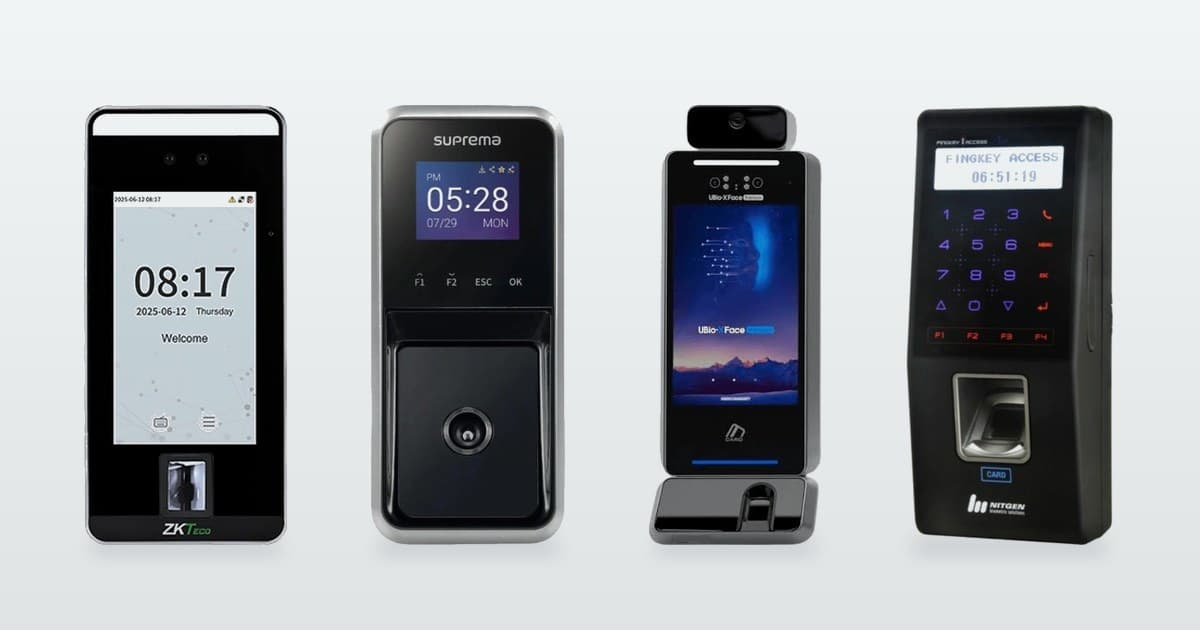
The six products below show the range. Figures come from our product pages, so confirm them against the current maker datasheet before you approve a quote. A speed figure measured in ideal conditions will not always match a dusty gate at six in the morning, so trial your preferred model with real staff.
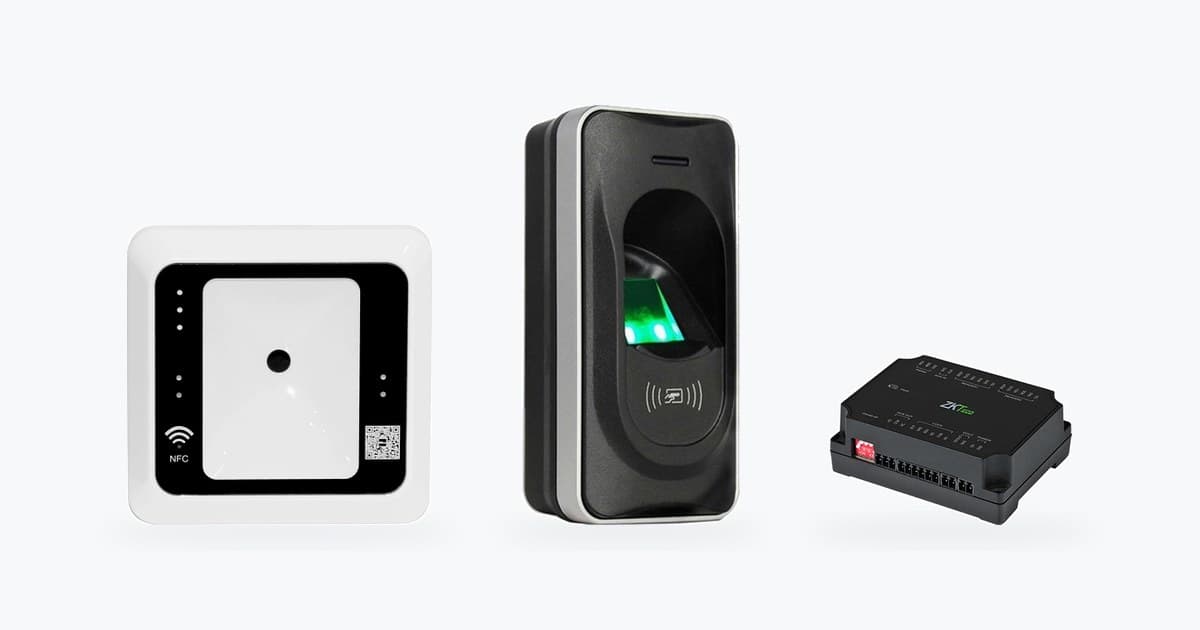
Terminals and readers also serve different roles. A terminal has its own screen and suits a clocking point. A reader such as the FR1200 connects to a controller, which suits a door that also records attendance. Decide which job each location does before you compare prices. You can see more models on our Suprema brand page. If you need a suprema biometric device installer in dubai, ask them to test the entrance as well as quote the terminal.
Suprema FaceLite: a compact face terminal with live face detection, listed for lighting up to about 25,000 lux, for doors with limited wall space.
SpeedFace-V5L Series: a ZKTeco face terminal with fingerprint, optional palm, card and password options, for companies that want several methods in one unit.
HIKVISION DS-K1T671M: a Pro Series face terminal with a 7 inch touchscreen and a listed recognition range of about 0.3 to 3 metres, for enterprise entrances.
UBio-X Face Premium: a walk through face terminal listed for recognition up to about 4 metres, for high traffic entries.
Nitgen Fingkey Access 2: an IP65 fingerprint terminal with live finger detection, card and password options, for attendance points where staff have clean hands.
ZKTeco FR1200: a compact IP65 fingerprint and RFID reader that connects over RS485 to a controller, for doors that also log attendance.
How do you size terminals for shift change?
Plan capacity from the peak, not the daily average. Count how many people arrive in the busiest fifteen minutes, then size terminals and entry lanes around that figure. Every extra second per person adds minutes to the queue at a labour accommodation gate or construction site, and queues quickly become a management problem.
Remote sites also need resilience. Heat, dust, crowds and weak connectivity often come together, so choose terminals that store records locally and sync when the link returns. Our business network and WiFi installation team can design links for those sites. Linking terminals to turnstiles or gates also stops people clocking in for absent colleagues. Agree who will check those links and how a failed sync gets reported to your team.
Cost comparisons should follow the same logic. Fingerprint terminals are usually cheaper per unit, while a face terminal may handle more people per minute, so the total at a busy entrance can come out closer than the unit prices suggest. Compare the number of terminals you need for peak arrivals, plus software licences and support terms. A quote built only on hardware price tells you very little.
How should you enrol staff and protect biometric data?
Accuracy starts at enrolment. Capture faces in the same lighting and at the same height as the live terminal. For fingerprints, enrol two or more fingers so staff have a backup if one finger is injured. Poor enrolment causes many of the complaints that managers blame on hardware, and a little care here saves weeks of frustration.
Independent testing such as the NIST face technology evaluations shows that algorithm quality varies between suppliers, so ask which algorithm a terminal uses and request a trial with your own workforce. Biometric templates are personal data. The UAE data protection framework sets expectations, and free zones such as DIFC and ADGM apply their own rules. Tell employees what you collect and why, encrypt templates, limit administrator access and take legal advice on your obligations. Our guide to face matching and PDPL goes further.
Review performance after the first month. Check how many scans were rejected, which terminals cause most retries and whether any group of staff struggles to clock in. Small changes such as adjusting mounting height, adding a shade canopy or enrolling a few workers again often fix most issues.
Conclusion
There is no single winner. The right biometric attendance machine UAE sites need depends on dirt, gloves, light, queue size and how carefully data will be handled. Fingerprint terminals remain sensible for clean offices. Face terminals usually suit dusty sites and busy gates. Test both with your real staff before you commit. Vega Digital designs, installs and supports attendance systems with its own engineers across Dubai and Abu Dhabi. Talk to our team about an attendance trial for your site.
Frequently Asked Questions
Which biometric attendance machine UAE offices should buy?
A clean office with short queues can do well with a fingerprint terminal or a compact face terminal. Choose based on headcount, peak arrivals and hygiene preferences, then trial your shortlisted model with real staff before you buy in volume.
Does a face detection attendance system work with masks?
Many current terminals can match faces with masks, but accuracy depends on the model, settings and lighting. Test with real workers wearing their usual protective equipment before rollout, and keep a card or PIN backup available for exceptions.
Why do fingerprint readers struggle on construction sites?
Dust, sweat, dry skin, cuts and worn fingertips make ridges hard to read, and gloves must be removed for every scan. Frequent sensor cleaning and enrolling several fingers per worker help, though they rarely remove these problems completely.
Can one terminal support face, fingerprint and card?
Yes, some can. The SpeedFace-V5L Series page lists face, fingerprint, card and password options, depending on the model. Managers can then assign a suitable method to each group, such as face for site workers and card for visitors.
Do attendance terminals need an internet connection?
They need a network link to send records to attendance software, but many terminals can store events locally during outages and sync later. Check this feature on the model you choose, because it matters on remote or poorly connected sites.
Is biometric attendance data covered by UAE privacy law?
Biometric templates identify people, so treat them as personal data. Inform employees, encrypt templates, restrict administrator access and delete records when staff leave. Confirm your obligations with a qualified legal adviser, including any free zone rules that apply to you.
How should attendance terminals be maintained?
Clean sensors and camera windows regularly, update firmware, check time synchronisation and review failed scans every month. An annual maintenance contract keeps terminals, controllers and software supported, so small faults do not turn into payroll disputes at the end of the month.
How long does an attendance rollout take?
It depends on the number of sites, terminals and staff to enrol. Allow time for a survey, a small trial, cabling, enrolment and software setup. Enrolling large shift teams usually takes longer than fitting the hardware itself.