
A Suprema access control integrator in UAE does much more than fix readers to walls.
A Suprema access control integrator in UAE does much more than fix readers to walls. The real work is deciding which device does what, how doors report back to the platform and who owns the system after handover. Suprema now positions BioStar X as the successor to BioStar 2, which brings access control and video monitoring into one platform. This guide explains the scope of that work using eight products Vega Digital lists, so you can compare integrator proposals and see what a good one includes.
Key Takeaways
Scope starts with the door schedule, because each door decides the reader, controller, lock and credential you need.
BioStar X brings users, doors, alarms and video monitoring together, so licensing and integrations need planning at the start.
Ask a Suprema access control integrator in UAE for commissioning records, administrator training and a clear support route.
What does a Suprema access control integrator in UAE deliver?
A strong proposal starts with a door schedule. It lists every door, its lock type, its credential, its controller and what happens during a fire alarm or power failure. Without that document, two quotes for the same building cannot be compared fairly, and missing items often appear later as variations.
The integrator then designs the network, installs and terminates the devices, sets up the platform and enrols users. Coordination with the fire system and door hardware suppliers belongs in that scope too. Local life safety requirements apply to door release, so confirm those with your consultant and the relevant authority.
Buyers looking for a suprema supplier in dubai should separate supply from integration. A supplier can deliver a boxed terminal. An integrator is responsible for a door that works every day. You can see the range on our Suprema brand page, and read about wider projects under our access control and attendance work.
Good scope also covers the awkward doors. Glass doors, fire exits, lifts, car park entries and shared tenant areas often need different hardware or extra approvals. Walk these with the integrator early, because each one can change the lock, the cable route or the sequence of work. A survey that only counts doors will miss them.
What does BioStar X change in the scope?
BioStar X combines access control, biometric identity, monitoring and video analytics in one environment. That can reduce the screens a control room watches, but it also widens the project. Decide early who manages users, who watches alarms and who may see video, then map those duties to roles in the platform.
Our product page describes a modular licence structure, so ask which tier covers your door count and features. Ask how the system will be backed up, how updates will be scheduled and what connects to it. If you are moving from an older platform, plan the migration of users and credentials as a separate task with its own test. Check current details with Suprema, because licence tiers and features can change.
Handling face and fingerprint data also needs a clear policy. The UAE data protection framework applies alongside any free zone rules, so bring your legal adviser in before enrolment starts.
Agree who approves changes, too. Once several departments use one platform, a small permission error can affect doors, attendance records and video access at once. Write down who can add administrators, who can change door schedules and how those changes get reviewed.
Suprema BioStar X: the unified security platform listed as the successor to BioStar 2, covering doors, alarms, access logs and AI video monitoring.
Which terminals and readers suit which doors?
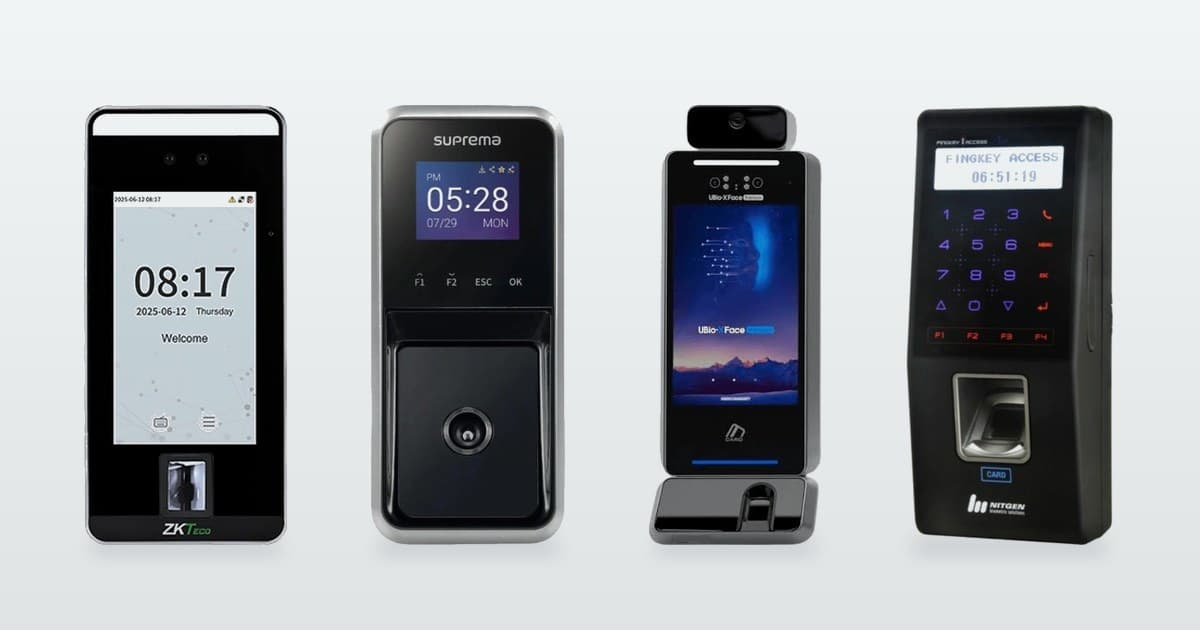
A terminal has a screen and can often hold users and make decisions itself, which suits main entrances and attendance points. A reader is smaller and reports to a controller, which suits narrow door frames and internal doors. Most buildings need a mix of both, chosen door by door.
Anyone searching for a suprema face reader dubai should check lighting and mounting height first. Face terminals perform best with the right camera height and no strong sun behind the person. Our pages list about 25,000 lux for FaceStation 2 and FaceLite, and maker guidance says to avoid direct sunlight. Test your actual entrance before ordering in volume.
Keep spare credentials in your plan for visitors and contractors, who rarely need a full enrolment.
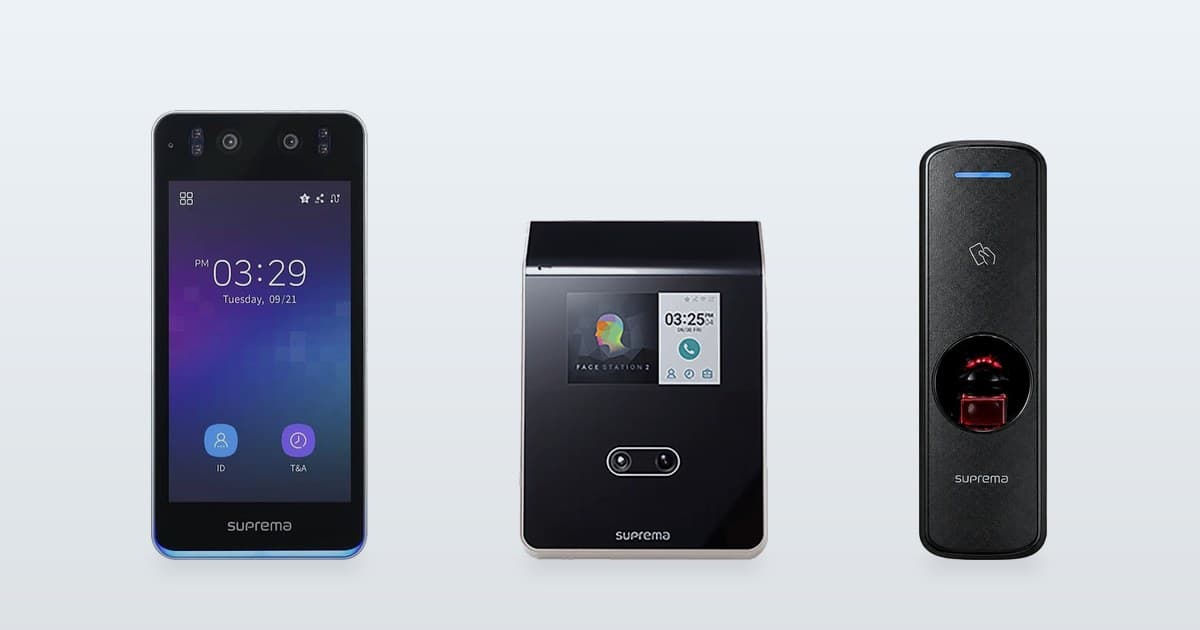
BioStation 3: an AI face terminal with QR, barcode, NFC, BLE and RFID options, for main entrances that need several credential types.
Suprema FaceStation 2: a face terminal listed with up to 30,000 users, for access and attendance at busy corporate entries.
Suprema FaceLite: a compact face terminal with live face detection, for doors with limited wall space.
X-Station 2: a 4 inch touch terminal with RFID, PIN, mobile, QR and optional fingerprint, for access and attendance points.
Suprema BioEntry R2: a slim IP65 fingerprint and RFID reader for narrow door frames in centralized systems.
XPD2-MDB / XPass D2: a compact weatherproof RFID reader, with mobile credentials on compatible versions, for frames and outdoor doors.
Where does a controller fit, and when do you need one?
A controller keeps door decisions in a secure area instead of behind a reader on the unsecured side. That is a useful design choice for sensitive rooms. It also gives you one place to manage relays, door sensors and exit buttons, which simplifies maintenance across a floor.
Plan controller positions along with your cabling routes and power backup. Ask how many doors each unit serves, how many readers it supports and what happens if the network link fails. Then confirm that the design leaves spare capacity for future doors. Our article on why access control is the first line of defence explains how this fits into office security.
Power deserves the same attention. Decide which doors need backup power, how long that backup should last and how a low battery alarm reaches your team. Then test a real power cut during commissioning, with the facilities team present, so everyone knows how each door behaves before people depend on it.
CoreStation 20: a two door controller listed with up to 500,000 users and 5 million event logs, for centralized RFID based systems in offices, campuses and data centres.
How do you compare two integrator quotes?
Two quotes can show the same Suprema terminal and describe very different projects. Line them up against your door schedule first, then check what each one includes for cabling, locks, exit buttons, door sensors, power supplies, network ports and platform licences. Missing items are often not savings. They are costs that return later as variations.
Next, compare the labour. Ask how many days each quote allows for commissioning, enrolment and administrator training. Enrolment is easy to underestimate on a large site, especially when shifts make people hard to reach. Poor enrolment causes many of the rejection complaints that managers later blame on the hardware, so it deserves a proper plan and a named owner.
Then ask about the first failure. Who answers the call, how quickly can they attend and where do spare readers come from? Ask whether the door fails open or closed, and who can restore access if the platform server is down. Those answers often tell you more about an integrator than a product list does, because they show whether anyone has planned for daily operation after the project team has left site.
Conclusion
Choosing a Suprema access control integrator in UAE comes down to scope. Ask for a door schedule, a clear BioStar X plan, the right mix of terminals, readers and controllers, and complete records at handover, so your team can run the system without guesswork. Vega Digital supplies, installs and supports these products with its own engineers across Dubai and Abu Dhabi. Book a site survey and bring your door list, and we will show you what the project needs, door by door.
Frequently Asked Questions
What does a Suprema access control integrator in UAE do?
An integrator surveys each door, designs the devices and platform, installs and commissions the system, enrols users and trains administrators. It also coordinates with door hardware and fire alarm teams, and supports the system after handover.
What is the difference between BioStar X and BioStar 2?
Our product page lists BioStar X as the successor to BioStar 2, adding unified monitoring and AI video features to access control. Check Suprema's current documentation for the upgrade path that applies to your existing system and devices.
Should I choose a terminal or a reader for each door?
Choose a terminal where people need a screen, several credentials or attendance functions, such as main entrances. Choose a reader for internal doors and narrow frames, where a controller in a secure area makes the access decision.
Can Suprema face terminals work outdoors in Dubai?
Some can work outdoors, but direct sun and heat need care. Mount them under shade, avoid strong backlight and check the rated environment on the maker datasheet. Test the terminal with real users at your entrance before ordering in volume.
Can employees use a mobile phone as a credential?
Yes, with compatible devices. BioStation 3 and X-Station 2 list mobile access, and XPass D2 supports it on compatible hardware versions. Check the model version on your quote and confirm licensing and phone support with your integrator.
Do I need a controller if I use face terminals?
Not always, since many terminals can make access decisions themselves. A controller still helps when readers sit on unsecured sides of doors or when you need many readers on one floor. The door schedule will show where it fits.
How do I connect Suprema to our HR or attendance software?
Ask your integrator which export or integration method suits your platform and HR system, then test it with a small group first. Agree who owns the attendance data and who checks the records before each payroll run.
What support should I expect after handover?
Expect commissioning records, backup details, administrator training and a named support contact. A maintenance contract for your security systems can add scheduled checks, firmware planning and fault response, so problems are found before they lock people out of a door.